Aboriginal Convicts

Aboriginal Convicts - Australian, Khoisan and Maori Exiles by Kristyn Harman
Aboriginal Convicts – Australian, Khoisan and Maori Exiles by Kristyn Harman

by Kristyn Harman

Standing before a tall, lop-sided headstone in the colonial cemetery at Maria Island just off the east coast of Tasmania, I could just make out the inscription. It commemorated Hohepa Te Umuroa, a New Zealand Māori warrior, who had died there in 1848. It was one of those moments of profound separation that occasionally jolts those who have left behind the familiarity of home to experience life elsewhere. At the time, I could not fathom what particular circumstances might have brought Hohepa so far from home at the hour of his death. It was only some years later that I grew to understand that indigenous people such as Hohepa were transported into captivity at a time when Tasmania had been Van Diemen’s Land, and Maria Island a convict probation station. In his case, he and four of his companions had been found guilty of ‘being in open rebellion against Queen and country’.

Having learnt that a few Māori warriors had been transported from New Zealand to Van Diemen’s Land, I became intrigued by the notion that perhaps some Australian Aboriginal people had also been transported within the penal colonies. While some historians considered this unlikely, a foray into the colonial newspapers and archived convict records soon revealed that that indeed had been the case. At least ninety Australian Aboriginal people were transported as convicts. And, like the Māori, they were all men. Shocking stories began to emerge, all set against a backdrop of frontier conflict with the violence and intrigue that it had entailed.

There was Jackey who, in 1834, was shipped from Newcastle to Sydney to face trial, chained naked on the deck of the steamer William IV, with the leg iron cutting through his flesh to expose his ankle bone. He died just weeks after arriving in Hobart to begin his sentence. Then there was Yanem Goona, an elder from the Grampians, who was shipped to Norfolk Island for being part of a community involved in sheep stealing (read economic sabotage – they drove of hundreds of the woolly beasties) regardless of whether he was personally involved. He was said to have cried whenever he thought of home. He died at the convict hospital in Impression Bay in Van Diemen’s Land before his sentence had expired. And there was also Tommy Boker. Charged with cattle stealing, all he could tell the criminal court was that ‘the beef was good’. They had to let him go after that. He got discharged to the Benevolent Asylum. Of the Australian Aboriginal men who were transported to Norfolk Island, Van Diemen’s Land, and the penal islands at Port Jackson, very, very few survived to return home. Many died within their first year in captivity, some of wounds suffered when they were captured, others from illness, and heartbreak at separation from kin and country.

It didn’t end there. From the late 1820s until the 1850s, at least thirty-four Khoisan people were transported from the Cape Colony (now part of South Africa) to the Australian penal colonies. Some had been soldiers who were court martialled for mutiny and desertion. Others were farm labourers indicted for theft and other crimes against their colonial masters in outlying districts. Many served months or even years at Robben Island, waiting for a convict transport (ship) to call in from England or Ireland that had room to take a few more prisoners of the Crown to the Australian penal colonies. Perhaps one of the most poignant cases was Wildschut’s. According to the Vandemonian authorities, he was ‘an old Bushman whose language cannot be understood’. Shipped half way around the world, the Khoisan convicts had no means of returning home even if they survived their sentences. And, unlike Australian Aboriginal convicts, many did survive. Their convict records are peppered with numerous offences, many of which relate to escapism. Some escaped mentally through imbibing copious quantities of alcohol. Others physically escaped through absconding. Further punishments were meted out, extending their time in captivity. Once released, these men had nowhere to go. Willem Pokbaas, a ‘cripple’ who survived Port Arthur, later lived rough sleeping behind the lime kilns on the outskirts of Launceston in the north of Van Diemen’s Land where he eventually died of an aneurism. Willem Hartzenberg ended up in the pauper depot at Port Arthur after his sentence expired, and was perhaps buried on Dead Island, now known more romantically, if still somewhat darkly, as ‘Isle of the Dead’.

Remarkably for a population that had so recently sent the last known indigenous inhabitants of its acquired land off into exile on a much smaller offshore island, the colonists of Van Diemen’s Land expressed their collective indignation when the traditionally-clothed Māori warriors arrived on their shores in 1846. How dare their colonial cousins across the Tasman Sea treat their indigenous population so badly?! As astonishing as this outpouring of outrage may appear from a present day perspective, it worked in the favour of the New Zealand captives. While Governor George Grey desired for them to be sent to Norfolk Island or Port Arthur from where they could be encouraged write cautionary tales for the consumption of other Māori, public pressure locally saw the men shipped instead to Maria Island. Given an overseer conversant with their language, the five warriors were (unlike other indigenous convicts from across the Empire) housed separately from the general convict population. They were allocated gentle tasks such as vegie gardening, and were allowed to hunt and fish. Nevertheless, their health suffered.

All were grief stricken when Hohepa Te Umuroa eventually succumbed to tuberculosis. Most unusually for a convict (but in keeping with the esteem within which the Vandemonian public held the Māori prisoners), his burial site was marked with a headstone. It was the existence of that remarkable stone that enabled Hohepa’s whanau (family) to reclaim him, and to accompany his remains home to his beloved Whanganui River in 1988, where he was laid to rest more than 140 years following his death. The last of the exiled Māori had finally returned home.

Kristyn Harman is a New Zealander currently living in voluntary exile in Tasmania. She is a historian, university lecturer, and author whose monograph Aboriginal Convicts: Australian, Khoisan, and Māori Exiles (UNSW Press) recently won the AHA Kay Daniels Award.


 

Booking to the Future

download

by Scott J Faulkner

Tasmanians tend to not purchase tickets for cultural events in advance. It is a habit we share with other small communities – but it frustrates organisers and threatens event viability, particularly for small event operators.

On the glittering isle of Manhattan, it is a way of life that tickets are bought weeks or months in advance. To enter the hallowed halls of the United Nations General Assembly, you need to book tickets a month before. A ticket to the Crown of the Statue of Liberty may currently be purchased by the prescient – for September. And any attempt to buy a ticket from TKTS for a Broadway show, sees you join in a queue that the author estimates was over half a kilometre long at noon on a Tuesday. The reality facing New Yorkers is that cultural, sporting, or entertainment events are popular and in high demand. This is factored into the behaviour of New Yorkers.

Such a reality, however, is one that is only now developing for many residents of Tasmania. The recent queues at Dark MoFo’s Winter Feast were met with shock and surprise from locals. Why Tasmanians have this habit is a question that is up for debate.

One reason may be for generations Tasmanians have known that they could turn up to a show at the last minute and buy a ticket, usually without any queuing. Historically events rarely sell out (indeed, with many barely, or not even, breaking even) so there were almost always seats – often good seats – available at the door. Tasmanians have had the luxury of not needing to buy a ticket in advance, and so became accustomed to not doing so.

The inclement weather of Tasmania, a place where an Antarctic blast can freeze the most beautiful summer’s day, may be another contributing factor – particularly for events held outdoors. ‘We’ll see what it’s like on the day’ was a common response from my parents for any request to attend an event. We all know just how miserable a Tasmanian day can get. Why pay in advance for the privilege of stand in bitter wind and driving rain?

Finally, there’s the ‘Catch-22’ factor of Tasmanians knowing that Tasmanians have a habit of not buying tickets to big events, which often leads to the cancellation of events due to a perceived lack of interest and the need to pursue a refund of tickets. Time and time again we’ve seen major events in Tasmania (understandably) cancelled due to a lack of interest in pre-sales – particularly music festivals or concerts. It’s probably one reason why Tasmanians still don’t see as many acts or events as their mainland counterparts.

The organisers of large and small events alike in Tasmania can find this situation incredibly frustrating. Event organiser Miss Binny Boo, founder and co-producer of the Hobart based Sideshow Cabaret, is just one of many whose business have been affected by this particularly Tasmanian habit. ‘I have in the past made show line-ups smaller because I was worried about if we could pay all the performers,’ says Binny. ‘I know some of the other Hobart producers have cancelled shows in the past due to a lack of pre-sale ticket purchases… this a real shame as a few of the shows that have been cancelled were showcasing some amazing talent.’

In an age where tickets can be bought for events of any size online, often at a discount, more Tasmanians should plan and book ahead, preferably as early as possible to give organisers the assurance that their events will be financially viable enough to proceed. By embracing early pre-booking, Tasmanians will improve the confidence of event organisers – particularly smaller organisers – to bring emerging and niche acts into Tasmania from interstate and overseas, and provide more opportunities for emerging Tasmanian performers to develop their artistic talents at home. This would allow the cultural renaissance of Hobart, and Tasmania more broadly, to flourish more strongly. While habits often take a while to change at 40o south, an adjustment to pre-booking will see improvements for audiences, artists and event organisers alike.

Scott J Faulkner is a writer and political advisor who was born in Northern Tasmania and now lives in Hobart. Having just returned from Europe and North America, he has an interest in seeing Tasmania adopt best practice from overseas while retaining the quintessential elements that make Tasmania unique.

“YA is about ebullience and nakedness and joy”

Clementine-193x300

by Kate Gordon 

When my parents were teenagers, there was no such thing as YA. Young readers moved straight from Blyton to Hardy, with maybe a quick pit-stop at Salinger on the way.
He was the lone, flag-waving YA author, back in the day. Back before YA was a thing. And I bet nobody ever asked him when he was going to write a “proper” novel.
People ask me. People ask me all the time. When will I write for grown-ups? Do I think I could do it? Don’t I want to write a real book one day?
Outwardly, I smile and mumble some blathering thing and then run away as quickly as I can. Inwardly, I perform kung fu.

Because, well, the thing is, I have tried to write a grown-up novel. Twice, in fact. And I did it, both times, not because I felt like I “should” write a “grown-up” book; because it was more worthy or intellectual or mature. I did it, twice, because the story just came to me and so I wrote it. Because that’s just how I roll. And, twice, I’ve been given the following feedback: “This would work if you rewrote it as YA”.

Because my story was too hopeful. Too anticipative. And “Grown-up” books – the ones that win awards, anyway – they’re not like that. Unless they’re “genre novels.”
But that’s a whole other post in itself.
And it’s nothing, as a recent post has posited, to do with happy endings.
And it’s definitely nothing to do with simplicity. It’s nothing to do with naïvete. It’s nothing to do with books for grown-ups being complicated and books for teens being simple. Anybody who thinks that hasn’t read Friday Brown. Anybody who thinks that hasn’t read Girl, Defective, or Looking for Alaska, or Two Boys Kissing, or Only, Ever, Always. Or Black Juice, or … I could go on. But the people who believe that YA is uncomplicated and inane have probably switched off already. They were never listening to begin with.

I’ve come to peace with it. I’m a YA author. And if you begin reciting Tolstoy in your head in place of listening the moment I tell you that, I say, “your loss”. Go and read your “difficult” novel, telling yourself it’s opening your mind, forgetting the fact you closed your mind the moment I told you I write for people under twenty.

I’m a YA author. And I’m actually fiercely proud of it. Because hopeful? Empowering? Full of possibility and life and freedom and wonder? That’s what I want in a book. That’s why I mostly read YA. I want to write about hope. And what is more hopeful than being thirteen, on the cusp of life, with all of its brilliant opportunity in front of you?

I’m proud of it because we’re a small group, us YA writers, and we’re tight-knit and ferociously delighted to be doing what we do. I’m proud of it because it feels courageous to be in this relatively new market. Teenagers have only existed for the past hundred years or so. Teenage fiction for a much shorter length of time. We’re bright and shiny and sparkly and that feels exciting.

And I’m proud of it because I was “that kid”. I was the kid who lived in the school library, and for whom books were an escape from the difficulties of the real world. Books gave me hope for the future. Books let me see worlds outside the one I inhabited and made me think that maybe there could be a place for a strange kid like me, in one of them. I write for those kids.

Maybe the people who stopped reading when I said I write YA were those kids, too. Maybe they’ve forgotten what it was like. Maybe reading a YA novel would remind them.

I write for kids, too, who have never loved a book before. I write with the hope that they’ll love mine and this will change their world. I write for the kids who might be struggling, and might be helped, in some way, by what I write. I write YA because when teenagers love a book, they love it, with a wildness you don’t see amongst other literature buffs (apart from those who read genre, but that’s another post in itself). They dress up as its characters. They write fan fiction. They get tattoos. They start clubs. They pen gushing letters to authors. They love that book something fierce. Grown-ups do that, too. They’re just too cool to admit it.

Kids who love books don’t care about being cool. They love with exuberance and abandon.

YA is about abandon. YA is about ebullience and nakedness and joy.

I might write another “grown-up” book one day, if a story comes to me. It’ll probably be too jubilant, still, and I’ll probably be okay with that. And I’ll probably be okay every time I recommend a book to a colleague and they show interest until I tell them it’s YA. Until they tell me they don’t read YA. More fool them. Their loss.

I’ll be okay because I know I’m doing something good here. And because I love it. And it makes me blissful. And if it makes just one young person blissful, too, that’s enough. That’s everything.

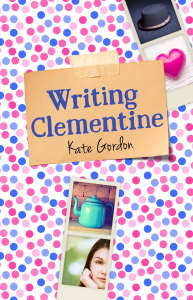
Kate Gordon’s latest YA novel, Writing Clementinis launching at Fullers Bookshop in Hobart, Tasmania, this Sunday, July 6. 

Kate Gordon lives in Hobart, in a mint-green cottage, with her husband, her very strange cat, Mephy Danger Gordon, and a wonderful little girl who goes by the name of Tiger. Kate dreams that one day she and her little family will live in another cottage, by the beach, with goats and chickens. In the meantime, she fills her house with books, perfects her gluten-free baking technique, has marvellous adventures with Tiger, and she writes.

Eilean Neave (Coomb Island), Tongue Parish, Sutherland, Scotland

by Kris Erskine

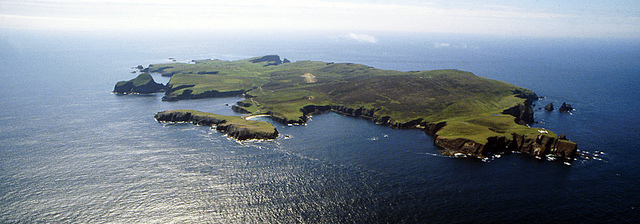
Fair Isle, seen from northeast on flight from Lerwick to Fair Isle

Eilean Neave is the northernmost nemeton (a clearing within a grove, originally a place for tribal meetings and celebrations, later a little sacred enclosure) that is still identifiable in the place name landscape. Despite having no freshwater sources there are traces of enclosures with two specific sites known respectively as St Columba’s Chapel (from which the alternative name, Coomb Island is derived) and a monastery dedicated to St Bride.

Continue reading “Eilean Neave (Coomb Island), Tongue Parish, Sutherland, Scotland”

Especially # for Tadhg # Transportation # London

by Natasha Cica

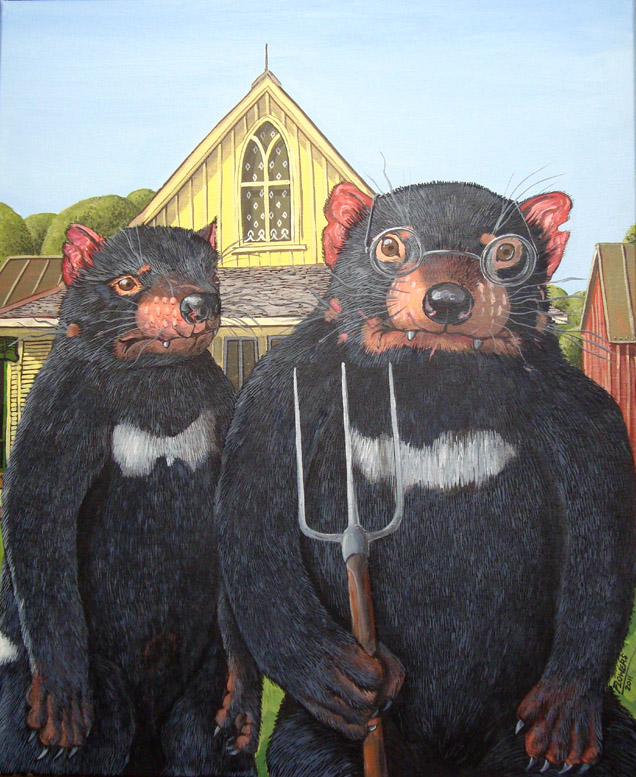
‘Tasmanian Gothic’ by Bill Flowers 

I am strongly inclined to admire anyone who tries to open a new space for quality writing, reading, thinking, being or doing.

Especially #1 if they toil in the world of publishing. Whatever that means now, in the age of the global selfie. Where gatekeeping, quality control, production, distribution and even content mean wildly different things from just ten, five or even two years or minutes ago.  As writers – or readers, thinkers, be-ers or do-ers – we can follow one of two paths.

Continue reading “Especially # for Tadhg # Transportation # London”

Castaway

By Darren Lee

typewriter1

Readers may already be familiar with the popular radio programme Desert Island Discs. For decades this has been a familiar Sunday lunchtime fixture, along with dry roast beef and the casual racism of an elderly relative. The concept behind the show sees worthwhile inspirational figures (as well as the occasional politician) being asked to select their favorite music to keep them occupied while stranded on a hypothetical island. This is fascinating enough, but those who are shipwrecked are also given three items to read: the Bible, the Complete Works of Shakespeare and a paltry allowance of one of their own choice.

   Continue reading “Castaway”

Newly found Sappho poems, Tasmanian translation

Translated by Thomas Connelly

Two new poems have come to light recently. Supposedly these poems were written by the violet haired, pure, honey smiling Sappho. One poem, called The Brothers Poem is mostly complete, apparently missing only a verse or two from the start. The second poem “The Kypris Poem” is written to Kypris, better known to us as Aphrodite. This is, however, much more fragmentary.
The idea that this is a Sappho poem is backed up from this quote by Herodotus in his shaggy dog sort of a book. (Histories 2.135.1) “Rhodopis came to Egypt to work, brought by Xanthes of Samos, but upon her arrival was freed for a lot of money by Kharaxus of Mytilene, son of Scamandronymus and brother of Sappho the poetess.”
The scholars who have studied this these new poems say that they are undoubtedly written by Sappho, these sorts of absolutes scare me. However the works does to be in her dialect and her metre. Could it be an exercise from some student of rhetoric? Possibly. But I can not say.
I made a translation as part of my attempt to teach myself Ancient Greek, but I am not a student, I am not a scholar, so I am sure that I have made some mistakes. They are all mine. I tried to capture her metrical style, but with the differences of language this is problematic. I did strive to make my translation feel strange and archaic. Enjoy, but understand if this is Sappho, it is not one of her best.

======================
The Brothers Poem

While women chatter, Kharaxos is comeing,
His boat stuffed full! Of these outcomes only Zeus
And the other gods know. You do not have
To think such things.

Escort me, persuade me to offer
Many pleadings to radiant Queen Hera
For the return home of Kharaxos.
She guides his ship.

You will find us well. But for the rest?
Let us leave all that to the gods;
For fair weather after a fierce storm
Quickly appears.

If the king of Olympus decrees,
A helper will, in times of distress,
Turn the course. To these people blessings
And wealth will flow.

And us? Well if he would raise his head,
Larichos, and become at last a man,
The many heavy chains on my heart would
Once fall away.

Thomas Connelly
Thomas has been writing poetry for quite a long time now. He mostly prefers the ephemeral
excitement of spoken word events. In Hobart this is best shown by his involvement with Silver Words,
a group which meets last Thursday in the month at Frankie’s Empire cafe in Hobart. Like the facebook
page for more information.https://www.facebook.com/thesilverwords When not writing poetry or doing
dad stuff, Thomas enjoys heckling right wingers on social media.