


Sometimes Dreams Are Simpler Than You Think
by Fiona Lohrbaecher
 I’ve always been fascinated by the hidden language of dreams, those subtle psychological promptings of the subconscious. I used to read books on decoding their mysticism and slept with a dream diary by my bed. I looked forward to sleeping, to wandering rapt through that wyrd and whimsical world where anything is possible. Upon waking I wrote the images down before they melted in my mind like candyfloss in the mouth; substance gone, leaving only a sweet taste and a vague remembrance. A lost world, a lost paradise.
Recurring dreams in particular intrigued me; what was the deep, important message my psyche was trying to communicate? For years I was troubled by one particular dream. I was in a large shopping mall, a maze-like complex, trying to find the basement food court where a delicious array of vegetarian Thai food awaited me. But, as is the nature of dreams, I never could find it. I wandered up and down staircases, along corridor upon corridor, never reaching my heart’s desire.
I agonised over the meaning of this dream, never interpreting it satisfactorily. I knew that a house represented the mind; the different floors the different levels of being and consciousness. I wondered why I was always wandering to the basement, rather than trying to work my way upwards. For years the true meaning of my dream eluded me, slipping through my fingers like a handful of melting ice-cream.
Three years ago we set off on a big tour of the mainland. We set sail from Tassie, hit the north island and headed west. It was ten years since we’d last been in Western Australia, our original landfall in the Great Southern Land.
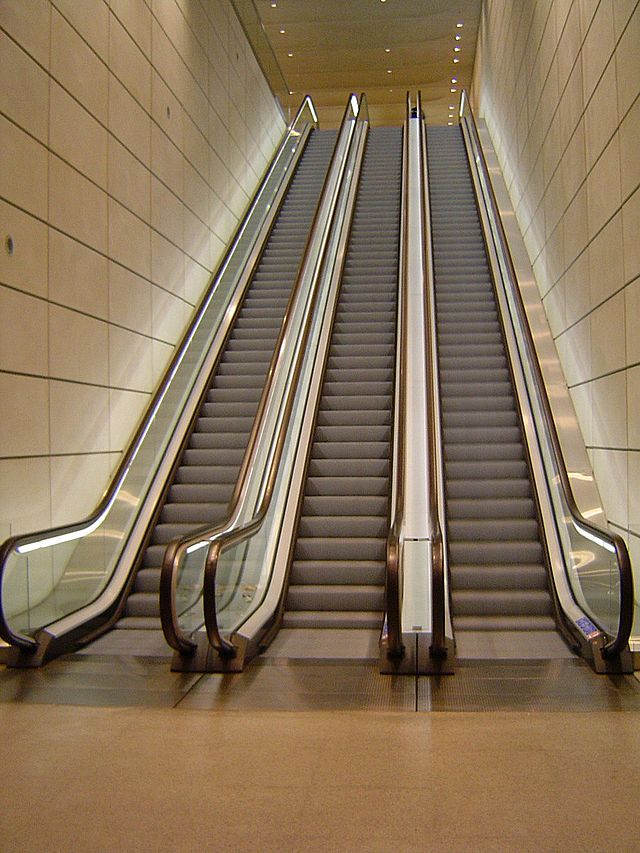
Re-exploring Perth with the children, lunchtime came around. We were in the mall. I remembered that the Carillon Shopping Centre had a good food court. We entered the large multi-storeyed shopping centre. A maze of corridors and levels confronted us. We took the escalator down, wandered along several corridors, a wrong turn here, a right turn there, descended another staircase, negotiated several more confusing corridors and finally found the food court. And there was the vegetarian Thai food stall. I stopped dead. A bell rang in my head. It’s a cliché but emotion really did well up in my chest and threaten to choke me. A lump rose in my throat and my breathing was fast and shallow. This was it! This was the place of my dreams, the food court that I had spent 10 years longing for and dreaming of!
And I realised then and there that sometimes our dreams are a lot simpler than we think; sometimes the message really is as simple as it looks, not a cryptic array of hieroglyphics waiting to be translated, overanalysed. And that the message of my dream, the clear, undisputable message was: that I have a deep and strong spiritual connection – with food!
Peel Island
 by Jamie Collinson
An island in London inspired me to write a book. Well, that and the idea of killing a flatmate I lived with for a while. Perhaps that came first. The killing, then the running away to an island.
The book ended up being set on another island, in a very different part of England. This other is real, too, although I’ve never seen it. I spent a huge amount of time on it though, on the page and in my head.
Other books are set there, too.
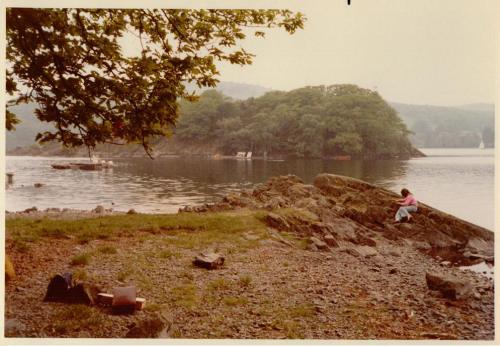
The island in London that inspired me is in Victoria Park. It’s the one reserved for wildlife that you see as you enter the park from the Old Ford Road side. Forget the re-sculpted one with the rude red pagoda that you can actually walk on. This was pre-clean up, when the park provided a physical manifestation of the mess inside my head.
On Sunday mornings, in the generic sort of life I once lived in East London, I would pause and regard that island. Hungover and often very guilty, I’d briefly entertain the fantasy of living on it. I’d take a tent, I imagined; wade out at night, live amongst the geese, ducks, herons and trees. I’d wonder how long I’d last.
Afterwards, I’d walk along the canal with a person I would disappoint in every way. I’d make promises to myself, and to that person, that I would fail to keep.
That place still features in my life. Whenever I come back to our ruddy little English island, I live within its orbit. It is different, and I am too.
My desire to kill that flatmate was converted into fiction. I poured all the rage out like hot bile and it cooled into a scene.
A while later, on a street not far from the island in Victoria Park, the man in question asked me what my book was about. I could tell he already knew.
The island that part of the book is set on is in Coniston Water in the Lake District. I think I was wrong to say I’ve never seen it; I must have, once, because I’ve driven past that lake. Can the memory of being a child, sitting in the back of a car and promising to buy it for my grandmother, possibly be real?
I can’t remember it though, not as it truly is. On maps and in pictures it is shaped like a comet, fading out into a rocky tail. Its trees sprout from it like a tuft of pubic hair.
Peel Island.
Wildcat Island, in the other books.
Donald Campbell died beside it. His last words were:
‘Straightening up now on track… I’m getting a lot of bloody row in here… I can’t see anything… I’ve got the bows up… I’m going… oh…’
I was listening to the radio one day, before I wrote the book. The presenter said that Peel Island’s pub had lost its landlord, and needed another one. It was an important tradition that there was a landlord in the pub, and that person was always known as the King of Peel.
Of course, there is no pub on Peel Island. For years I thought I must have imagined the story. Writing this, however, has revealed to me the existence of Piel Island.
Islands within islands within islands.
No one lives on Peel Island, Coniston Water. A character called John tried to for a while, but he didn’t last very long.
transportationbook.com submissions:
Please send us short fiction, between 500-800 words for consideration for the website to transportationalmanac@gmail.com
Bulbowen
by Fiona Lohrbaecher
The giant Bulbowen was as high as the sky and as old as the hills. For him years were as seconds, centuries as minutes, millenia as hours. When he walked the earth shook and when it rained his footprints filled with water to make lakes.
One day, after years of walking, Bulbowen grew tired. He had walked from one side of the earth to another and was weary. He sat down, yawning and stretching. He lay down on his back and closed his eyes. The warm summer breeze caressed his eyelids and whispered lullabies in his ears, weaving a warm blanket of sleep around him. For years Bulbowen slept. For centuries he slumbered. And as he slept the wind blew dust across him. Year upon year, layer upon layer, the dust grew thicker and thicker, turning into soil. Birds dropped seeds on Bulbowen and, watered to life by the gentle rain, plants grew, spreading out their roots to hold the soil in place.
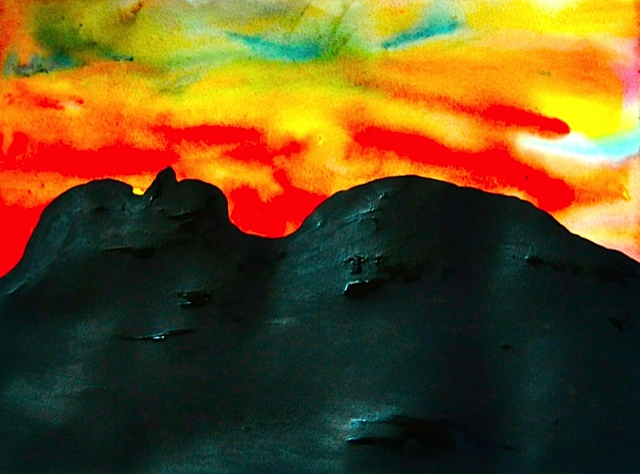
Millenia passed and, eventually, people came to the area. They noticed the shape of the mountain; its outline resembling the silhouette of a sleeping giant. They named the mountain Bulbowen, after the great giant of ancient legend.
The first people hunted on Bulbowen’s slopes, sleeping under trees or in bark shelters, moving on when the weather grew cold. After many centuries they started building houses and farming in the flat land around the mountain. A village grew up. Children went to school. People were born, grew old and died, all in Bulbowen’s shadow. They took their recreation on the mountain, walking in its cool forests, skiing in winter and mountain climbing, although nobody ever climbed the highest peak, known as Bulbowen’s nose. Legend promised disaster to anyone that tried.
Then, one day, the earth began to move. The first tremors were small, barely discernible. Windows rattled, crockery clattered, pebbles danced on the ground. The quakes increased in intensity. Buildings shook, trees bent and swayed in an eerie dance. The people were frightened. They ran out of their houses, workshops and schools. The ground was moving violently beneath their feet now. Boulders bounced down the side of the mountain and trees slid down in flurries of earth. People grabbed their most treasured possessions and ran for their lives, across the plain, away from the mountain but still the rocks bounced around them and the tremors could be felt for miles. They ran and did not stop running until they were sure they were quite, quite safe.
The mountain shook and heaved. Every tree toppled and tobogganed down its slopes. Great landslides were stripping the mountainsides bare. Slowly, slowly the mountain changed shape. It seemed to spread out for miles, then great tranches of land stretched up to the sky. The top half of the mountain rose skywards as the giant Bulbowen rose to a sitting position, stretching and yawning. He looked around him in mild surprise at the ruined houses, the fallen trees, that lay around him. Then he rose to his feet, shook the last remnants of soil from his hair and beard and continued his walk.
When the people returned to rebuild their ruined houses they found a vast new lake where their mountain had been. A new layer of fertile soil was spread across their farmland and hundreds of fallen trees lay scattered around to be used for the rebuilding. So the people changed from skiing to water-skiing, and their recreation pursuits all centered on the lake. They swam, fished, boated and wind-surfed in the vast body of water they called Bulbowen’s Bath.
transportationbook.com submissions:
Please send us short fiction, between 500-800 words for consideration for the website to transportationalmanac@gmail.com
Slight delays on all services
 by Ian Green
“Sfuloo?”
“Nah, Rose, listen- it’s Cthulhu. CUH-THOO-LOO, yeah?”
Rose frowned and kicked at a pebble with her battered hi-tops.
“And you reckon it’s him in the underground?”
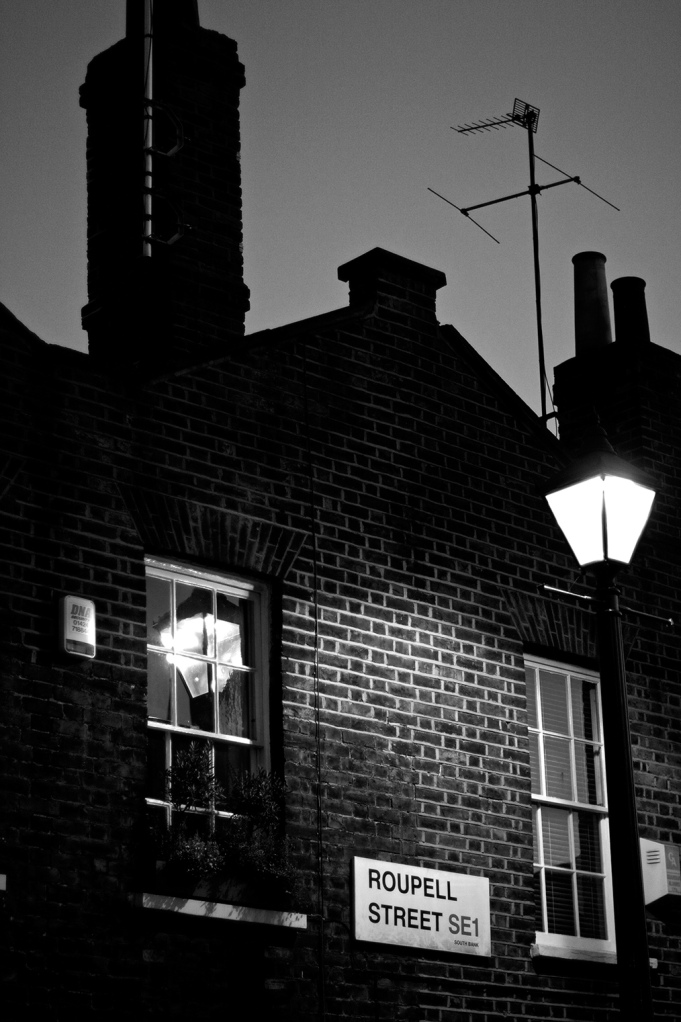
They were down a side street south of Waterloo station, far from picturesque skylines. The surrounding warehouses loomed in the tarnished glare of sodium streetlamps.
“Not IN,” Keith said, smiling, “UNDER. A three hundred metre tall octopus-elephant-beast-god-monster. You saw the badges, yeah? Something’s down there, and I reckon these guys are keeping him asleep. ‘Cos if he comes up it’s like end of the world-Armageddon Ragnarok APOCALYPSE level stuff, right?”
Rose smiled. She had seen the badges. They had spent days riding the underground checking members of staff. Each wore a little pin on their chest, a single point the size of a button with eight lines curving out from it. Most were silver, some gold. Keith swore he saw a jet black one on a guy at Marble Arch, but Rose hadn’t seen that. Sat in Keith’s flat, it all seemed fun, like signalling saucers from Primrose Hill, or trying to sneak cameras on tours of masonic halls.
Keith stopped in front of an anonymous steel door and consulted a battered A to Z.
“This is it,” he said. Rose leaned over his shoulder and looked at the map.
“Jubilee, Circle, District, Victoria, Northern,” Rose incanted. They had spent hours poring over maps of ley lines drawn by pagans. When you overlaid the ancient lines of power and the underground map, well… Rose was the one who noticed the nexus; one point circumscribed by the Jubilee, Circle, District, Victoria, and Northern lines- the point just south of Waterloo.
“The deepest point of the London underground,” Keith had said, and they had grinned.
“What do you think is down there?” Rose asked. Keith’s eyes sparked.
“I’ve got my ideas. I need to check some sources. I’ll tell you when we go down…”
This was what they did for fun- Rose didn’t drink, not after seeing her dad drink. Keith wasn’t good with people. So they followed clues, they tramped across the city. It filled time, it was fun, and it hurt no-one. They had spent a month tracking the grave of the Hampstead vampire and had ended up lighting some candles and leaving garlic and crosses over their top suspect’s tombstone. They had spent weeks conspiring to steal the London Stone, before Keith decided it was too dangerous— if the Stone left London, the city would fall. This was the way it had been, for years now. Rose wanted was to be part of something bigger- Keith helped her.
The tube strike was a blessing. No trains to worry about, no people, no electrified lines. The door was unlocked, swinging open onto darkness at Keith’s touch. He grinned at Rose and held a finger to his lips and they began the descent.
Seventy feet down and two hundred feet south they heard the footsteps. Keith grabbed Rose and pulled her tight to the wall and they turned off their head torches.
Silence.
Footsteps.
“Transport police— stop right there!”
Suddenly there were torch beams crisscrossing their paths, blinding their eyes. Rose tripped on a railway sleeper and fell, her face and hands landing in rough gravel inches from a rail. Would that rail be electric? She didn’t know. She was breathing so hard she thought she might burst. She could hear Keith scuffling behind her. She stared at the rail until she was roughly picked up.
“What’re you up to?” asked one, whilst another leafed through Keith’s A to Z. He stopped on a page and showed it to a few of the others. They stared at Keith and Rose then, and their faces hardened.
The officers walked them further down the tunnel and refused to be drawn out by pleading or questions or apologies. Finally they came to an opening, an arched vault where a dozen lines crossed.
Keith saw it first, and began to scream, swearing, shouting, struggling. Between the tracks there was hole— darkness thicker than ink, an onyx maw. An absence of light— a presence of darkness. Not brick or stone or mud— something organic. Rose’s eyes widened and she looked around for salvation. She saw the pin on the lapel of the British transport police officer holding Keith— a solid black point with eight curved lines spreading from its centre. Rose stared at it and then locked eyes with the officer.
“What’s down there? Sfuloo?” she heard her voice ask. Keith had stopped screaming, had started crying. The officers forced them to the precipice. Rose couldn’t stop herself from looking- blackness and darkness and endless depth and something else far below.
Movement.
The man holding her gave her shoulder a squeeze.
“Sorry love,” he said. He pushed, and Rose tumbled into the black, toward something bigger.
You can read, Water Birds, by Ian Green in the upcoming publication from Transportation Press, Islands and Cities, for updates on the release subscribe to our newsletter.
Writers’ Bio:
Ian Green is a writer from Northern Scotland. His short fiction has been performed at Liars’ League London, LitCrawl London, the Literary Kitchen Festival, and published in OpenPen London magazine. His work can also be heard on The Wireless Reader literary podcast and will feature in the upcoming short story anthologies Broken Worlds by Almond Press. His story Audiophile was a winner of the BBC Opening Lines competition 2014 and was produced and broadcast by Radio 4.
Traffic Report
 by Claire Jansen
Hey London – what did you get up to on the weekend?
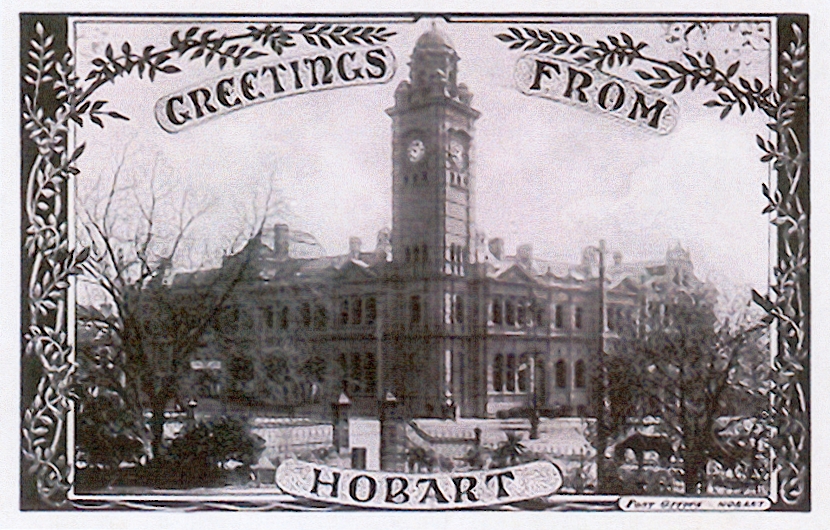
This weekend in Hobart, I went to an art exhibition and saw a video piece by Georgia Lucy who had hung a hundred corn chips from a backyard clothesline – a hills hoist. Each bright orange triangle was strung up with a plastic clothes peg and fishing line. They fluttered like a mobile. Georgia cranked the clothesline handle to move the hoist up and down and the chips floated and jerked towards bowls of salsa and guacamole set up on red bricks near a sprinkler that came on intermittently to water the grass.
On Saturday night, I went to a party at a giant share house with a smoke machine set up in a downstairs room full of blurry people dancing. At the party I met one of the housemates who is from England and back in Hobart for a second time. I asked him why he had come back, and he said there is something about Tassie. I don’t disagree and wonder if by the place he meant people too, and if the two factors don’t become pretty close to the same thing in choosing a place to live.
I’ve never lived in London but I’ve been there. Not with much money though. Your pound swallowed my dollars and I mostly ate fish n chips so I still had money for (warm?) beer.
When I was in London the Olympics were on and your TVs didn’t mention anything about the Australians winning medals, which I found more unsettling than I thought I would. I picked blackberries from the laneway behind a house in Chingford that looked like all the other row houses. I caught the Tube into the centre from Walthamstow station and the double decker night bus back to Charing Cross. At the Notting Hill Carnival I was crushed against a barrier as a truck with a hip hop band on the back passed over a bridge creating a bottleneck and had to literally unplug to calm everyone down. It scared me because of how many people there were and how frenzied everyone became when we started to panic. Every time I watched the news it seemed like another teenager had died in a gang related shooting.
I didn’t work in a bar or drink Fosters or live in a shoebox-sized flat with fifteen other Australians. But I probably would have enjoyed doing that if I had for a while at least. I flew home. The trip was over like the weekend.
Today I drove to work because I got out of bed late and ten minutes went by with the radio on so I could listen to the news, trying to reconcile what I feel like I should know versus what I can remember. I found myself hopelessly tuned into the national traffic report – a car and truck collided on the approach to Woolloomooloo outside of Sydney – road closures in Blacktown due to scheduled maintenance on Bundgarribee Road, West, between Balmoral Street and Craiglea Street.
In contrast Hobart has been fine, said the presenter, before he looked towards Adelaide, also nothing much to report, and out across the Nullarbor to Western Australia.
Against a collection of stories, I arrived. But as I start to plan my week I’ve been thinking, like all good escape artists do – what is it like to live in London? What is it about that place? And what do you get up to on the weekend?
You can read, Manhattan is an Island, by Claire Jansen in the upcoming publication from Transportation Press, Islands and Cities, for updates on the release subscribe to our newsletter.
Litzilla vs The World
 by Darren Lee
For some time now I have been incubating a monster in a quiet corner of my house.
It started off as an innocent enterprise, the result of over-eagerness during free time spent nonchalantly wandering around bookshops; I caved in at the distraction of the many colourful spines compressed on the shelves, the tables of promotions and carefully curated selections from the bibliophile bucket list. I bought the books and took them home intending to wallow in the wisdom of their pages, but instead there were other things to which I diverted my attention. And so, these stories that I had hoped to enjoy sat ignored in the corner, patiently waiting for the day in which they would feel my fingers tickling their pages and see my eyes dart back and forth across their text.
This was never intended to be a permanent arrangement, but over the years this nameless corner grew until it became time for it to be christened as “the To Read pile”. But that name seems no longer appropriate; something has began too fester in the pile, a dark malevolence spreading its tendrils throughout the room. The pile has propagated and mushroomed into a pulsating monster, a beast born from my addiction to books, a foaming monster I have ignored to far too long. The To Read Pile is dead, long live LITZILLA!
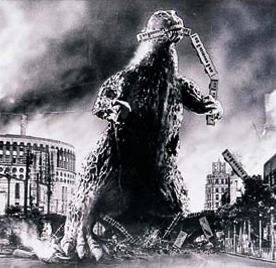
Litzilla is a creature made of many parts: Its legs are sturdy, and made of the thickest tomes from the Three-For-The-Price-Of-Two era. It clomps around supported by these pages, novels that were intended to be read, but have been mostly ignored since they were the unloved stepchildren of the originally purchased trio.
Litzilla’s girthy waistline is comprised of charity shop finds; as if the frivolous purchase of a book was justified by its philanthropic intent. This part of Litzilla is mostly made up of seventies Penguins, and their distinctive spines make it look like the abominable creature is sporting a distinctive orange jockstrap.
Litzilla’s torso is made up of those important books that I’ve genuinely always meant to read, but have found physically inaccessible; removing one from the pile will cause the entire structure to teeter over, burying me under a Jenga tower of unread text.
Litzilla’s head is a bulky, Easter Island type-affair made from hardbacks grabbed in the January sales. At first I was eager to leaf through these, but now they’re bulky and cumbersome in comparison to their paperback compatriots.
The crowing of the beast is a single cyclopic eye made from Richard Flanagan’s Booker winner, purchased automatically following the award. It is the capstone holding Litzilla together, staring at me with its beady gaze. Even though it’s only been there for a few weeks, it stares at me, hurt with neglect and demanding to be read next..
Efforts to constrain Litzilla have met with failure; I’ve tried pruning its limbs by slowly reading those books that I have so cruelly ignored. Litzilla has also been cropped, cuttings have been made and sent to the second-hand shop, where they will no doubt take root in someone else’s library. In one drastic move to arrest the growth of this bibliogical behemoth I banned myself from adding to it’s weight for several months, thereafter the siren call of literary shopping lured me back in. I have tried to cage Litzilla on a sturdy shelf, but now its bars are buckling and the monster is breaking free to leave its deposits around the house; all of them guilty piles admonishing my shortcomings as a reader.
The monster has become sentient. I fear its retribution. One day it will swallow me whole and trudge slowly from my house, looking for similar To Read Piles with which to merge. This giant book monster will run rampant, devouring streets, neighbourhoods and cities. No one will be safe! Run for your lives Litzilla has been awakened!
And yet still, I realise that I’ve not bought the new Ian McEwan yet, and well, it is on special offer at the moment. I would be foolish not to…
You can read, The Assembled Self, by Darren Lee in the upcoming publication from Transportation Press, Islands and Cities, for updates on the release subscribe to our newsletter.
 transportationpress.net