Women and Minorities: Part I

1024px-Royal_Albert_station part Iby Georgia Mason-Cox

The room was cheap, but ‘cheap for London’ wasn’t the same as being affordable. I scrutinized the ad. Of course it was a shared house (‘we are six friendly Eastern Europeans’) but I couldn’t expect to go straight from a crowded hostel to my own flat. I had to be realistic, but there were some things I wouldn’t compromise on. Balancing my laptop on my knee, and resting one arm protectively on my bag, I found the crucial information in the third paragraph: Royal Albert was the closest public transport link. After clicking through the photos, I concluded location was about all it had to recommend it. The rooms were dark and severe, with incongruous touches of chintz. But when the hostel looked like a school camp that had hosted a bucks’ night, what was a bit of jarring interior design? For central London it wasn’t a bad deal.

I was on the Beckton branch of the Docklands Light Railway when I realised Royal Albert had nothing whatsoever to do with the Royal Albert Hall. The address was in fact way out east, beyond the loop of the Thames. Still believing geographical isolation caused its metaphorical equivalent, I had no desire to tempt loneliness by being stranded out in no-man’s land. But there were worse things than a hostile flat. With its air of quiet paranoia, its rules and complex hierarchies, the hostel sometimes felt more like a low-security prison. If I didn’t get out soon I’d become a lifer, hanging around the common room and dishing out advice on the best time to get a hot shower and where to find a power point.

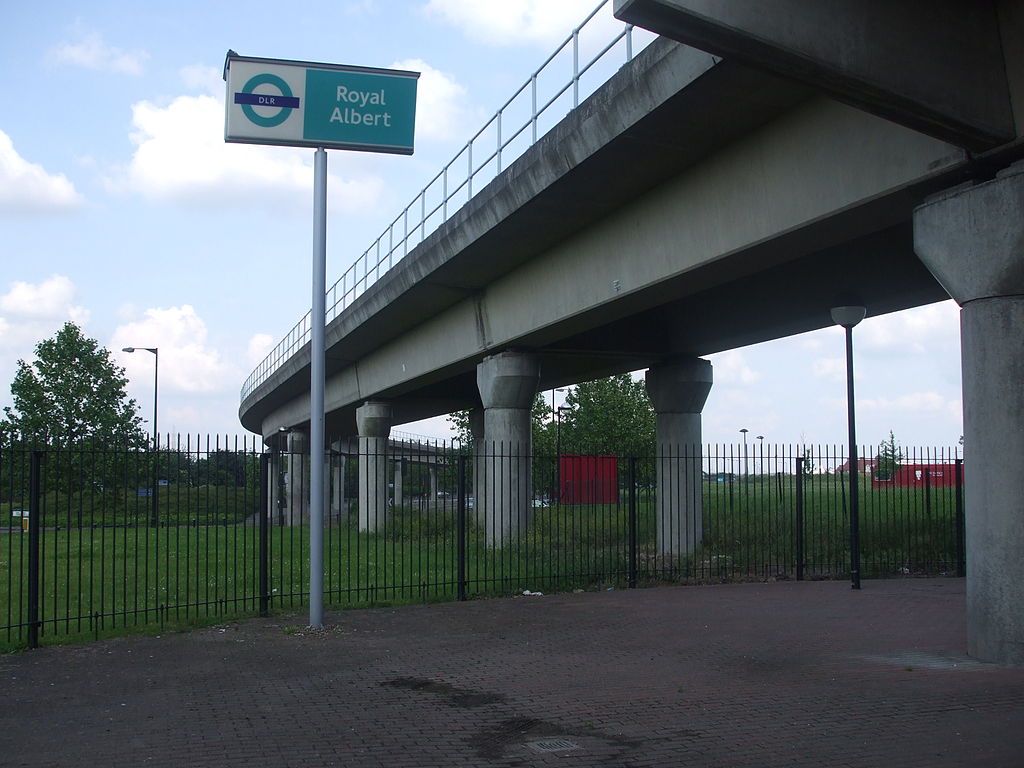
So I stayed on the DLR, and did some belated location research. Google said it was a good place to watch the take-off and landing of planes. The scenery had a low-rise bleakness common to the immediate vicinity of airports. Overpasses loomed briefly, a concrete blur. Things soon came into focus once I stepped out into the rain. Factories and fly-tips dominated the streetscape. Eventually I found the house. The front yard announced itself by extending an uneven carpet of cracked pavers onto the road. A few rubbish bins, huddled together for warmth, were the only obstacles to the front door. Now it was only curiosity impelling me to knock.

Bogdan was a Bulgarian security guard with a boxer’s nose. He owned the place; we had talked on the phone. Charming and proprietorial, he led me inside. ‘It is very good possibilities for the renovation,’ he announced. We toured the ground floor. The décor was eclectic, like a hermit and an Orthodox priest had fallen out over furnishings. I asked who else lived there but Bogdan didn’t hear me. Distracted, he used his foot to nudge a thigh-high leopard-print welly out of our path. ‘Anastasia’s,’ he muttered. ‘We go up!’

I sat on the bed, observing Bogdan observing me pretending to observe the space. It was quiet, a long way to the high street. In fact it felt a long way from anywhere. Bogdan said there was a short-cut to the Tesco’s. He told me about the other tenants, pointing out their rooms: a Latvian student in that one, a Polish couple next to her, a young Estonian woman over there. As he showed me the upstairs bathroom I peeked into the half-open door beside it. Centre stage was a dressing table, weighed down by a shining sea of perfume bottles and jars of lotion that were reflected back in a vast wall-mounted mirror.

‘Who lives there?’ I asked, imagining an exotic Russian showgirl – Anastasia, no doubt, the owner of the glamorous welly. Bogdan closed the door. ‘This is my room,’ he said.

Downstairs we chatted. He was about to go into business. There was a gap in the market for Slavic home gym equipment, and he knew some suppliers. Perhaps I’d like to be his secretary? But I’m only telling you this for context – it has nothing to do with the actual story.

That begins a week later, with Patrick. I saw his ad at breakfast and had arranged a viewing by lunch. The small print troubled me but four words weren’t enough to put me off going. We met outside his office. Tooting was almost as far south as Royal Albert was east, but there was no mistaking it with any famous landmarks. ‘It’s a good area,’ said Patrick. ‘Lively.’ The wind gnawed at my knuckles and I pulled my sleeves down to cover them. He inspected me carefully. ‘I assume you’ve a job?’ I made my hands visible again, and told him I waitressed part-time. ‘Right,’ he said, unlocking a peach sports car. ‘Hop in.’

Writer’s bio:

Georgia Mason-Cox is a Tasmanian-born writer living in Sydney. Her London adventures took her from dishwashing, to charity collecting, to working for the Royal Household. This is her first published work. It is fiction, just.
Transportation Press: Featuring the Nottingham Writers’ Studio

Brenda Baxter
Image from the Book “Urbanislands” by Brenda Baxter

An excerpt from ‘Urbanislands’ a short book by Nottingham writer and artist Brenda Baxter.

Arriving in Nottingham from the station walk towards the city centre. Soon it will be possible to circumnavigate the island’s perimeters and explore its centre. You’ll notice the street names and other aspects of its geography speak of a past island life. The buildings are bound by an interlocking system of roads and traffic lights where it’s still possible for the traveller to walk with some ease of entry and exit. The flow of traffic is both predictable and relentless, like the tides and estuaries. Soon you will come to know them and even take comfort from them.

There is a struggling island community and one that can be similarly experienced in islands in the North West of Scotland or Ireland. George Pett built here in 1914 and that building still stands. Many of its inhabitants have long since fled to other shores to make a living. Rumour has it that the Owner of the island has abandoned islanders and that there is little hope for their future livelihood. Maybe you will be able to encounter them on walking the island and maybe you will share a conversation for they have become shy and uncertain, wary of strangers, suspicious of tourists with cameras and fine talking ways.

Ocean is the place to meet the islanders. It’s one place that welcomes strangers. Tales are exchanged and those who congregate on its steps or in its doorways invite flights of fantasy and gruesome stories of the past. I’ve come here to understand the nature of things here and to find a way to escape the prospect of this island disappearing.

We’ll be posting video works by multi-media artist and writer Brenda Baxter in the following days.

Join us on facebook for the latest posts.


Transportation Press: Featuring the Nottingham Writers’ Studio

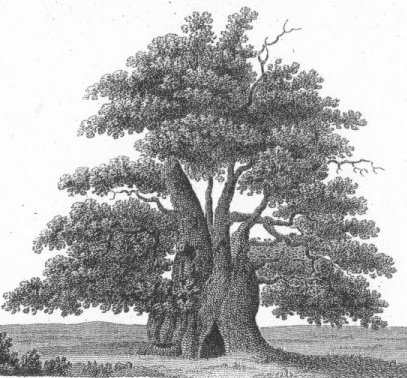
Major Oak by Major Hayman Rooke 1970
Major Oak by Major Hayman Rooke, 1970

Grace Darling at Alnwick Castle – after the Forfarshire

by Kathleen Bell

‘And there was no more sea.’

Inland tastes of chaff and honey.

The earth is rich with grain.
Pigs, sheep are humble. Silent, the soft-eyed calves
tender their docile necks to the farmer’s knife
and streams run sweet.

By night the seals swim close
pushing through nightmare in a moment’s grace
till they slide, laugh, clap – bloated mistakes
disturbing dreams.

The taste of salt is gone.
I am made soft as soil. My task is set:
obey the ladies, watch, give answer to their
endless questions.

‘Books and my father schooled me –
I learned the Bible, sermons, tales of peoples,
countries elsewhere.’
Read polish clean write cipher –
oceans and words.

‘Always busy at home,
we harvest the sea. Cormorant, sea-weed, eggs
are good for food.’
Seals we must skin and salt,
which we take, eat.

The woman flapped like a bird
when we rowed to Harcar. ‘Spray was fierce, hit hard’
at her closed and stone-dead sons whom we took, laid
limp on black rock.

‘But surely suffering saves?’
Riches do not ennoble. I have been carried
far from my work and set among ladies –
dull, indolent, useless,
wicked as seals.

Writer’s bio:

Kathleen Bell’s recent pamphlet at the memory exchange (Oystercatcher, 2014), was  short-listed for the Saboteur awards. She has poems in the current issues of New Walk, PN Review and Under the Radar, and has recently been included in the anthology A Speaking Silence, literary magazine Hearing Voices and the on-line poetry magazines The Stare’s Nest and Litter. She writes fiction as well as poetry, and teaches Creative Writing at De Montfort University.


Transportation Press: Featuring the Nottingham Writers’ Studio

images

Nottingham Loves

by Bridie Squires

I rise to the sound of the City Ground chanting,
runs and Raleigh bike rides,
riverside gathering
festivals and hissing geese,
rowing blokes’ megaphones,
the prickling of summer heat.

I get to the bus stop,
funds a bit low, so
I tick a quid off the shop
until tomorroh.

I clock Notts bop by,
hear cars rockin’ beats
from the cracked window
that causes all the beef.

Old biddies titter about
tram works and price drops,
we pass the back of Broado and
‘Ooh! This is my stop!’

We swing
down
the
green
pole
vines
of the jungle bus,
say ‘Cheers!’ to the driver
because we are a humble bunch.

Outside Viccy Centre,
gotta cross the road,
red man signals us to stop
but we don’t do as we’re towd.

A mum tells her kid to ‘HARK IT!’
while eating cobs on Viccy Market.
I skip the fish and buy some ham –
I get me cockles from Dave Bartram!

I make my way down Clumber Street,
shout ‘Ayup’ to maybe two or three
mates whose face I haven’t seen
since Macy’s.

I visit a few places:
The Corner, Confetti, Laser Quest, Library.
From Wilford Pond to Wollo Park,
it’s clean and it’s tidy.

The phone rings,
my mate’s been tryin’
to meet at the left lion
so we dip toes in the square’s fountain rain,
remembering the good old emo days.

We go Arb to take in the scenery,
the budding, fresh-cut greenery
packed with sounds of laughter laced
with love that comes quite easily.

We visit Forest Rec,
it’s filled with ducks and youths,
Goose Fair and the carnival
have joined to set the mood.

with toffee apples and live art,
rides and local music.
We’re churning creamy talent
so we nurture it and use it.

Even Whycliffe pops along
to sing a little tune
of how our city whispers ‘Nowt
is impossible to do.’

We make tracks to the Olde Trip,
sing songs among the caves,
when a text message shares tips
of a ‘CLIFTON TUNNEL RAVE!’

It’s the final hour of the eve,
I nip and see me mam,
drink cups of tea while eating three
Yorkshire puds with jam.

We talk brash, but warm and honest
from West Bridgford to Sherwood Forest.

From Silverdale to Hyson Green
and all the places in between,
we’ve built a city full of treats
on grounds of creativity.

For Nottingham, I’d pinch the throne
’cause there’s just no place like home.

Writer’s Bio:

Bridie Squires is a Nottingham enthusiast who loves to put pen to paper. As a family member of arts and culture magazine LeftLion, and of the spoken word collective Mouthy Poets, she enjoys brandishing a big gob all the same.

Transportation Press: Featuring the Nottingham Writers’ Studio

robin-hood-statue-2005

We’re featuring three poems by Pippa Hennessy, Project Director for the Nottingham City of Literature campaign and director of the Nottingham Writers’ Studio.


My Garden, Sixty Miles From the Sea

1.

this is the wrong island

2.

the MS Oldenburg bounds across the Bristol Channel

my stomach churns

an old man wearing blue dungarees

and a dishevelled demeanour

waves binoculars at a pair of guillemots

dolphins fold the waves like silk

the Rat Island oystercatchers shout

welcome, welcome, look at me, look at me

hammers on the hold door reply

we’re here

3.

red wine swells nine voices to climb

torch-beams to the glass-captured moon

a burnished beetle follows me

from the seals’ playground at the tip of Brazen Ward

to Long Roost, where ten thousand razorbills

and eight puffins nest

a dunlin trips over my feet

on its way to the next puddle

skylarks, invisible, fill the sky

five adults and seven children picnic

by the concrete engine block

of a WWII German bomber

I wish the gulls would hush

as a newborn lamb takes its first steps

two puffed-up pigeons huddle and grumble

by the one-roomed cottage where I shiver

and can’t sleep for laughing

4.

I am never more than half a mile from the sea

the sea which is always flat and grey

when I return to the wrong island


Author Bio:

Pippa Hennessy has published poetry, short fiction, graphic short stories and  creative non-fiction in various magazines and anthologies. She is Development Director at Nottingham Writers’ Studio, Project Director for Nottingham’s UNESCO City of Literature bid, and works for Five Leaves Publications. In a past life she was a software developer, but she’s feeling much better now.

Transportation Press: Featuring the Nottingham Writers’ Studio

800px-Robin_Hood_statue,_Nottingham_Castle,_England-13March2010

We’re featuring three poems by Pippa Hennessy, Project Director for the Nottingham City of Literature campaign and director of the Nottingham Writers’ Studio.


In Old Light Cottage

A threadbare armchair enfolds me

the flue howls back at the gale

that portrait of Wellington gazes

out of the window at the lighthouse.

Handwritten scrawls fill the log book

not mine, not yet.

June 28th 2000

Saw a puffin. No time to write.

Boat leaving soon. Sad to go.

August 13th 2000

Another lovely stay. Did lots

of walking.

Then twenty-three and a half pages

in one hand.

October 23rd 2000

…The electricity went off at 12:23

tonight. I had to get up to go to the loo

at 2:14. The flue kept me awake for 3 hours

and 47 minutes altogether…

That October, when he wrote that,

we were here for six days

and another

because of the storms.

Slipping and sliding

down the Clovelly cobbles, our pink labels

matched his.

Hello. We’ll be neighbours

he said, standing too close.

I turned away to laugh with my friends.

We drank and tied our tongues in knots

in the lighthouse, for six days

and another.

The girls won all the games

and I fell in love

with this peat-topped block

of granite, glued by the Gulf Stream

to the Atlantic’s edge.

We celebrated the extra day,

he complained

his train ticket would expire.

Now I know too much of what he did,

when the flue screamed.

He didn’t write that he asked me for

a safety pin

to hold his trousers up

so he could get to North Light

on schedule.

He didn’t write

that our singing woke him up

when the boat was cancelled.

His review of the garlic bread

served in the tavern

was detailed

and informative. He didn’t mention

that we sat at the long table

playing bridge

loudly while he ate, alone.

He wrote:

7:58am, I washed up.

8:13am, I took the rubbish

out to the bins.

He didn’t see

the oystercatchers digging for worms

just behind the cemetery wall

or the gravestones

of medieval chieftains standing

where they had stood for centuries.

He didn’t hear

the seals singing as they rode the storm.

He didn’t feel

the spindrift skidding like rabbits

across the heather.

A threadbare armchair enfolds me

the flue howls back at the gale

and I write

18th April 2002

I am here.


Author Bio:

Pippa Hennessy has published poetry, short fiction, graphic short stories and  creative non-fiction in various magazines and anthologies. She is Development Director at Nottingham Writers’ Studio, Project Director for Nottingham’s UNESCO City of Literature bid, and works for Five Leaves Publications. In a past life she was a software developer, but she’s feeling much better now.

Transportation Press: Featuring the Nottingham Writers’ Studio

OLYMPUS DIGITAL CAMERA

Over the next three days we’ll feature three poems by Pippa Hennessy,  Project Director for the Nottingham City of Literature campaign and director of the Nottingham Writers’ Studio.


Quarry Beach

Do you remember the old ladder?

its broken step halfway down,

thorns scratching hands that clung

to ropes

and rotting wood.

We climbed down anyway

to where great granite eggs

make thunder under the waves.

Our bare feet took us over seaweed

and limpets

to see orange beaks

flash past, crying look at me

and we wished we could fly.

A seal swimming southwards

as usual

stopped briefly:

why do beasts with such long flippers

refuse to play with me in the waves?

One stone on another, we built

a tower to remind the sea

we were here

for a while

I sat, warming my back, hatching

an image

of the sun and the sea

and of you


Author Bio:

Pippa Hennessy has published poetry, short fiction, graphic short stories and  creative non-fiction in various magazines and anthologies. She is Development Director at Nottingham Writers’ Studio, Project Director for Nottingham’s UNESCO City of Literature bid, and works for Five Leaves Publications. In a past life she was a software developer, but she’s feeling much better now.

Cochineal

20150112_091056_Channel Hwy_11-1by Rosie Martin

Without any effort or intention, without willing it to be so, an image of a glass of water appeared in my mind. It thrills me when visual metaphors shimmer into place, for I have learned that they explain me to me in some surprising way.

Into the clear water dropped a bloodied tear of cochineal – bomb-like, turbulent, and spreading thinly, evenly, rapidly – forever changing the whole. This is what happened to my mind. In prison.

I have been doing some work in the prison. You see, I know how to teach people to read. I realise this sounds ordinary, but there is a lot of science to know, about what’s going on in the brain and mind of someone who doesn’t learn to read in the usual way. It’s anything but ordinary. I pour and pour into this work.

Two years ago I was sitting in an auditorium in which a plea was being made for volunteers to work at literacy tasks with prisoners. My colleague, who likewise pours and pours, was also there. At the end of the event, as we walked toward each other looking into each other’s faces from across the room, we knew simply what the other was thinking – we know how to add quality for these complicated souls unable to respond to regular methods of learning to read, we have the skills, we ought to be gifting this knowledge to these vulnerable men and women. In the moment my eyes met hers, I felt in my depths, a breathless sparkle like bright flow between river stones – vivacious élan which I have come to recognise as my herald of heart action.

Now, it’s a practical world that we live in and impetuous dash and ephemeral sparks have less to offer once an idea has a shape, for then of course, there is work to be done. So I rang the prison, and asked if I could come, bringing with me the skills splashed and filtered in through time in my craft, to tell about what I can do. Well – my hat is off and my shoulders are bowed – I have nought but respectful admiration for the workers in that place who consistently enabled me and showed gratitude. ‘Come, show us, tell us’, their instant reply.

Now, I’m a newcomer. Not to the work, but to this environment and this cohort. The principles to teach reading to those who have been unable to learn it are sure. Analyse each individual’s configuration of processing skills, set a plan designed for that configuration and direct-teach a hierarchy of skills at the just-right level of challenge. And all the while, honour the soul of he thus configured with warmth, patience, humour and the dignity of no judgment.  These principles work. Skills can be grown. And I saw myself unfazed by the hand scans, magnetic locks and clanging doors, for a mind is a mind and a heart is a heart, no matter where they are housed. Or warehoused.

This was the glass of water in the image of my prison experience – all this, clear and contained.

But I’m a newcomer to working at the prison and it’s not dream and sparkle and vivacity for they thus housed. For many – for most – the way of things has not been like the way of my things, but more like this: I can’t read, can’t access education, can’t get work – I’m poor. And another axis: what is tender communication(?) it has touched me so rarely(!), language is weak, vocabulary and knowledge diminished, can’t get work – I’m poor. And there are many other axes of disadvantage. Smashing, shattering axes of disadvantage shocking with tortured horror and foisted upon men and women when they were but sweet and soft-cheeked boys and girls. Through no fault of their own. Ergo, therefore – made poor.

I am reminded that miserable souls were transported to Pt Arthur bound in body and mind with the chains of events sprung of poverty. I’ve imagined those cold and wretched men. And all these years later, I stand in the gaze of souls transported to Risdon, also bound in body and mind with the chains of events sprung of poverty.

And here bombed the bloodied tear that suffused my mind in prison. Not enough had changed in two hundred years. Souls born into crippling vulnerability were then transported behind bars – and they are still being transported behind bars. These bars, the materialised versions of those already built into their minds and lives through too little of the salve of society’s tenderness upon their developing beings and impoverished stations. Bloodied poverty. Bloodied lack of compassion. The ruddy tear swept through me.

Yet I note that time settles and changes the discernment of murky waters. For I see that my community now imbues the wretched of Pt Arthur with esteem and affection – a response of compassion two hundred years too late for those lives. Their odour and base mouths are not so much now forgotten, as that without the revulsion of sensory impact, these unsavoury qualities are not even considered when convicts’ stories are told. Judgement of their crimes, likewise, is not now forgotten, but rather is barely considered; for absent now is the unclad emotion of the perpetrated and the foaming of the virtuous. Now, only the mistreatment and the humanity of those hapless are left for us to see. And they are found wretched, and heroes; revered for their human worthiness.

Time does indeed settle and change the discernment of murky waters. For I also note that the respectable of old London and Hobart towns have not withstood the judgement of time quite so well. Popular hindsight now finds heartless fault in these of the ceiled and comfortable houses, clean and cologned, sending wretches to the end of the earth for the loss of a fop’s handkerchief. Now, as we appraise, their humanity seems to have been absent and their stories are imbued with stony hardness; the London cold upon their hearts.

But it is me I see surveying the glinty image in my mind. Bloodied tear to rosy clarity. My standing and my Chanel are respectable in my era. My insured wide-screen, the fop’s handkerchief. My aversion to human pungence, the pharisaic disgust. My lack of compassion, the lock upon the chains.

Tenderness, compassion, warmth and forgiveness are in the full-blooded cochineal concoction to pour and pour upon poor – to recolour with beauty the crippling abhorrence of smell, filth and profanity; and eventually even to ease the slicing agony of the pared and naked emotion which rises in the anguish of offence. Poverty to the end of the earth I say, not the poverty-stricken. Lest we all be destined to poverty in the wholeness of our beings.

This rosied glass is not new. I’m just the newcomer who teaches people to read. Yet I’m clear that I know this: the tools of my craft – warmth, patience, humour and the dignity of no judgment – are amongst the simplest tools of the empowerment of humankind. They and their stable mates, some with much loftier names, have been written of for centuries. Many shimmering images in the minds of many have brought forth wise words pointing toward these strong and gentle tools, well-oiled. We know how they are used because we have felt them at work in our innermost beings. They are the underrated means with which large change must be crafted. If we can be courageous, and feel their weight, their fit within our hands; and use them, even when it takes grit of the heart to do so – for love is a verb. A doing word. And a mind is a mind and heart is always heart – no matter where housed.

Writers’ bio:

Rosie Martin is a Hobart-based speech pathologist specialising in intervention and support for people of all ages with literacy impairments and social communication impairments. She has recently founded a benevolent organisation, Chatter Matters Tasmania, to assist with bringing these supportive services to the most disadvantaged in our communities.