Transportation Press: Featuring the Nottingham Writers’ Studio

images

Nottingham Loves

by Bridie Squires

I rise to the sound of the City Ground chanting,
runs and Raleigh bike rides,
riverside gathering
festivals and hissing geese,
rowing blokes’ megaphones,
the prickling of summer heat.

I get to the bus stop,
funds a bit low, so
I tick a quid off the shop
until tomorroh.

I clock Notts bop by,
hear cars rockin’ beats
from the cracked window
that causes all the beef.

Old biddies titter about
tram works and price drops,
we pass the back of Broado and
‘Ooh! This is my stop!’

We swing
down
the
green
pole
vines
of the jungle bus,
say ‘Cheers!’ to the driver
because we are a humble bunch.

Outside Viccy Centre,
gotta cross the road,
red man signals us to stop
but we don’t do as we’re towd.

A mum tells her kid to ‘HARK IT!’
while eating cobs on Viccy Market.
I skip the fish and buy some ham –
I get me cockles from Dave Bartram!

I make my way down Clumber Street,
shout ‘Ayup’ to maybe two or three
mates whose face I haven’t seen
since Macy’s.

I visit a few places:
The Corner, Confetti, Laser Quest, Library.
From Wilford Pond to Wollo Park,
it’s clean and it’s tidy.

The phone rings,
my mate’s been tryin’
to meet at the left lion
so we dip toes in the square’s fountain rain,
remembering the good old emo days.

We go Arb to take in the scenery,
the budding, fresh-cut greenery
packed with sounds of laughter laced
with love that comes quite easily.

We visit Forest Rec,
it’s filled with ducks and youths,
Goose Fair and the carnival
have joined to set the mood.

with toffee apples and live art,
rides and local music.
We’re churning creamy talent
so we nurture it and use it.

Even Whycliffe pops along
to sing a little tune
of how our city whispers ‘Nowt
is impossible to do.’

We make tracks to the Olde Trip,
sing songs among the caves,
when a text message shares tips
of a ‘CLIFTON TUNNEL RAVE!’

It’s the final hour of the eve,
I nip and see me mam,
drink cups of tea while eating three
Yorkshire puds with jam.

We talk brash, but warm and honest
from West Bridgford to Sherwood Forest.

From Silverdale to Hyson Green
and all the places in between,
we’ve built a city full of treats
on grounds of creativity.

For Nottingham, I’d pinch the throne
’cause there’s just no place like home.

Writer’s Bio:

Bridie Squires is a Nottingham enthusiast who loves to put pen to paper. As a family member of arts and culture magazine LeftLion, and of the spoken word collective Mouthy Poets, she enjoys brandishing a big gob all the same.

The Chair


article-2140759-12F32154000005DC-112_968x748
by Shreya Sen-Handley

1 am, December, Monday, Nottingham

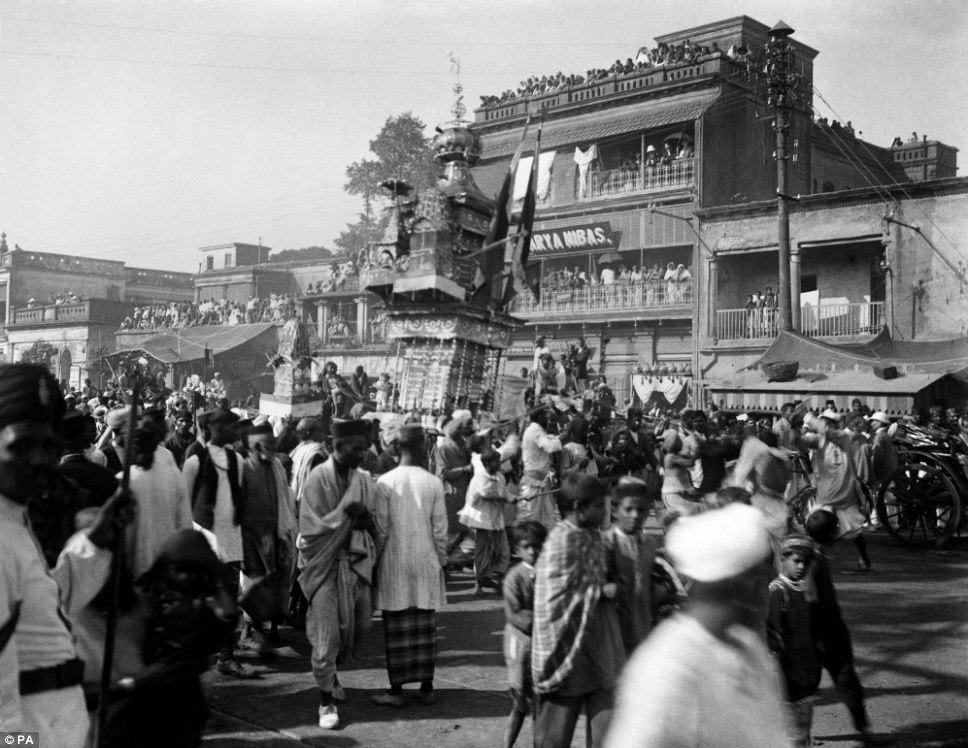
I wake with a start. This is not my bed. As my eyes adjust I realise I am in our spare room; my Calcutta Room. That’s OK then, I am just across the hall from my sleeping family. Not far. But as I turn towards the window, I realise why I had woken with such a strange feeling in the pit of my stomach. Silhouetted against the half-darkness of the frosted pane is a man. He is not my husband and yet he seems completely at home sitting in the chair I had brought over from my old bedroom in Calcutta. I can only see him partially in the grey light but he turns to smile at me. There should, my groggy brain tells me rather feebly, be no other man in this house. But there is something so familiar and reassuring about him, I slip back into sleep.

9 am, Monday, School Run

I have dropped the children off at school and can now think. Did I really see a man in the spare bedroom last night? When the kids tumbled in this morning to wake me, he was no longer there. He’s clearly a figment of my (perpetually) overwrought imagination. But as I let myself into the house, I find myself drawn to the Calcutta Room. I sit on the bed and scrutinise it. This is my history room. The Rathin Mitra scroll over the calico-covered bed is from the artist himself. The Ganesh Pyne pictures sitting higgledy-piggledy on the window sill bring back snatches of conversations I had with the man. The cushion covers are made from Ma’s old Dhakai saris which would have met a less dignified end otherwise. And in ceiling-high bookshelves and on the rickety round table beside my childhood chair are books that bear the imprint of having lived and been loved in Calcutta – dog eared, yellowed, with a ‘cha’ stain or two but only because they are so well thumbed, and by so many. Unlike my hometown, it is the quietest of rooms. And he is definitely not here.

If I slept, would he come back? Why do I want him back?

9 pm, still Monday

The kids are in bed and my husband snakes his strong sinewy arms around me, pulling me down on the sofa beside him. These few hours till midnight are our only ‘couple’ time. I sink into his embrace happily, as always, but tonight I am distracted. Where is The Man? I am thinking of a story I might write, I tell my husband, of the chair in the spare room. “The Calcutta Chair?” he asks trying to look interested, but he is tired, very tired, and drifts off.

1 am, Tuesday, still December, still snowing

I went to bed with my husband, how am I in this room again? I know The Man is there too even before I turn to look at him. He is sitting in his chair by the window. No, he’s lounging; he’s tall. I am in a silky wisp of a slip and should feel embarrassed, but when he sits on the bed beside me and runs his long fingers down my leg, it feels like the most natural thing in the world.  Brown skin against brown skin; quite a departure for me. He leans over and kisses me. I’m thinking, I hope there won’t be any beard burns in the morning, when I should be thinking how could this be happening? How does he get in here? I don’t think for a moment, who is this man, because I know him well.

10 am, Tuesday

I have two free hours in the day to get my story written. What started as an excuse to explain my distraction to my husband has become a real project; a story about my Calcutta Chair. It is an antique armchair that once lived in my mother’s great-grandfather’s house. Many literary lights of Bengal have graced that chair. One in particular, made it his own, scribbling bits of poetry as he chatted.

2 am, Wednesday, December, snowing still

But to write this story well, I have to get to grips with my visitor. Literally. That tired old excuse we writers trot out to cover our tracks. And to convince ourselves we have to be amoral for our art. Soon, I am in so deep I can’t seem to extricate myself.

Our encounters are made somehow more exciting by the fact that he talks to me in my own, barely remembered mother tongue. The poetic turns of phrase make his descriptions of what he wants to do to me, more- no, not refined, quite the opposite- deliciously shocking. Whispering heart-stoppingly dirty Bengali in my ear, he traces the curve of a breast with one sensuous finger, he bends to take my dilated nipple in his mouth but the words are lost and I pull away. I want to hear the words of love more than I want his love (and anyway the beard tickles). His hands cup my rounded cheeks while his lips and darting tongue trail their way down to the mound. Satisfyingly, he intersperses the curlicues of tongue with murmurs so rude, I writhe with both suppressed laughter and unfettered pleasure. The flesh-muffled whispers find their way, just as surely as his creaming tongue, into those hidden places which signal my readiness. I arch my willing body into his.

2 am again, Thursday, December, sleet storm

I awaken when he slips into bed beside me in the Calcutta Room.

I am discomfited by the memory of last night.  But I am clearly here for more, though I cannot for the life of me remember walking into this room. He grins, “E deshta boddo thanda”. His practised hands find their way into me again. But even as I give in to the pleasure once more, questions haunt me; this man would be welcome in any Bengali woman’s bed, how many has he had? How many does he flit between, from night to night?

But most importantly, how do I tell my Bramho mother that I’m fucking Tagore’s ghost?

Writer’s bio:

Shreya Sen-Handley is a former television producer and journalist who now writes and illustrates for the British and Indian media when she’s not looking after children and home in legendary Sherwood Forest. She has written for The Guardian, The National Geographic, CNN India, The Times of India, The Hindu and other publications and sites. A children’s book she illustrated for Hachette was published in April 2014 and her first book of writing, a memoir meets social satire, will be published by HarperCollins in 2016. She also writes fiction and teaches creative writing and illustration.” 

Castaway

By Darren Lee

typewriter1

Readers may already be familiar with the popular radio programme Desert Island Discs. For decades this has been a familiar Sunday lunchtime fixture, along with dry roast beef and the casual racism of an elderly relative. The concept behind the show sees worthwhile inspirational figures (as well as the occasional politician) being asked to select their favorite music to keep them occupied while stranded on a hypothetical island. This is fascinating enough, but those who are shipwrecked are also given three items to read: the Bible, the Complete Works of Shakespeare and a paltry allowance of one of their own choice.

   Continue reading “Castaway”

Newly found Sappho poems, Tasmanian translation

Translated by Thomas Connelly

Two new poems have come to light recently. Supposedly these poems were written by the violet haired, pure, honey smiling Sappho. One poem, called The Brothers Poem is mostly complete, apparently missing only a verse or two from the start. The second poem “The Kypris Poem” is written to Kypris, better known to us as Aphrodite. This is, however, much more fragmentary.
The idea that this is a Sappho poem is backed up from this quote by Herodotus in his shaggy dog sort of a book. (Histories 2.135.1) “Rhodopis came to Egypt to work, brought by Xanthes of Samos, but upon her arrival was freed for a lot of money by Kharaxus of Mytilene, son of Scamandronymus and brother of Sappho the poetess.”
The scholars who have studied this these new poems say that they are undoubtedly written by Sappho, these sorts of absolutes scare me. However the works does to be in her dialect and her metre. Could it be an exercise from some student of rhetoric? Possibly. But I can not say.
I made a translation as part of my attempt to teach myself Ancient Greek, but I am not a student, I am not a scholar, so I am sure that I have made some mistakes. They are all mine. I tried to capture her metrical style, but with the differences of language this is problematic. I did strive to make my translation feel strange and archaic. Enjoy, but understand if this is Sappho, it is not one of her best.

======================
The Brothers Poem

While women chatter, Kharaxos is comeing,
His boat stuffed full! Of these outcomes only Zeus
And the other gods know. You do not have
To think such things.

Escort me, persuade me to offer
Many pleadings to radiant Queen Hera
For the return home of Kharaxos.
She guides his ship.

You will find us well. But for the rest?
Let us leave all that to the gods;
For fair weather after a fierce storm
Quickly appears.

If the king of Olympus decrees,
A helper will, in times of distress,
Turn the course. To these people blessings
And wealth will flow.

And us? Well if he would raise his head,
Larichos, and become at last a man,
The many heavy chains on my heart would
Once fall away.

Thomas Connelly
Thomas has been writing poetry for quite a long time now. He mostly prefers the ephemeral
excitement of spoken word events. In Hobart this is best shown by his involvement with Silver Words,
a group which meets last Thursday in the month at Frankie’s Empire cafe in Hobart. Like the facebook
page for more information.https://www.facebook.com/thesilverwords When not writing poetry or doing
dad stuff, Thomas enjoys heckling right wingers on social media.

My Man in Havana

By João Cerqueira

Cuba

When I first went to Cuba the last thing on my mind was finding a character for a novel there. For writers, meeting beautiful women on tropical islands often results in a blend of Nora Roberts, Henry Miller and E.L. James. Passion, sex and, sometimes, a few whiplashes. And, during the few moments in which the flesh is allowed to rest, dips in warm waters, toasts with mojitos, grilled lobster and salsa also feature – after all, they are the only things left that can unite revolutionaries and opponents of Fidel Castro.

Continue reading “My Man in Havana”

Nightvoices

by Adam Ouston

goya.colossus

Over the past year I’ve struck on a new landscape. It is dark. Its features do not change. You are careful. You walk through it with your hands out. And you are in a constant state of déjà vu. Until recently I could fall asleep on a handrail. Anywhere. Anytime. And deeply like a distant cousin of the dead. There was the odd hiccup—those nights we all have from time to time—but on the whole insomnia was no more than a horror movie trope.

Continue reading “Nightvoices”

Islands in the Stream

by Sean Preston

There’s something quite sinister to me about the Dolly Parton and Kenny Rogers duet. Dolly, here, taking on the role of a Jolene, or at least providing the requisite doctrine for Jolenes. The song sort of qualifies romantic elopers in their abandonment of the wife and kids for the Portuguese cleaner, forging a fairytale aesthetic for do-badders. A story of cruelty becomes one of following your heart.

Continue reading “Islands in the Stream”

New Ventures in Perspective

By Matthew Lamb

I edit two literary magazines in Australia.

The first is the Review of Australian Fiction, which is nearly two-years old, and
is entirely digital; we publish two short stories every two weeks, delivered on an
epub format.

The second is Island, which is nearly 35 years old (although I’ve only been
editor since the beginning of 2013), and it is one of the heritage literary
magazines in Australia, published quarterly; traditionally print-based, but over
the last few years trying to adapt to the digital publishing space.

Working closely with these lit mags has given me a perspective to better
consider the other; what is unique to both, what is in common to each.

Continue reading “New Ventures in Perspective”