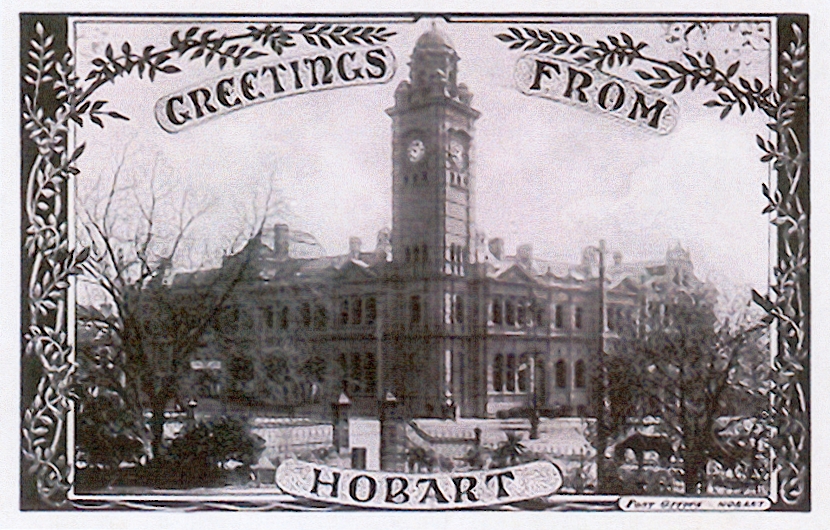
Traffic Report

WALCH, J & SONS FIG. 5by Claire Jansen

Hey London – what did you get up to on the weekend?

This weekend in Hobart, I went to an art exhibition and saw a video piece by Georgia Lucy who had hung a hundred corn chips from a backyard clothesline – a hills hoist. Each bright orange triangle was strung up with a plastic clothes peg and fishing line. They fluttered like a mobile. Georgia cranked the clothesline handle to move the hoist up and down and the chips floated and jerked towards bowls of salsa and guacamole set up on red bricks near a sprinkler that came on intermittently to water the grass.

On Saturday night, I went to a party at a giant share house with a smoke machine set up in a downstairs room full of blurry people dancing. At the party I met one of the housemates who is from England and back in Hobart for a second time. I asked him why he had come back, and he said there is something about Tassie. I don’t disagree and wonder if by the place he meant people too, and if the two factors don’t become pretty close to the same thing in choosing a place to live.

I’ve never lived in London but I’ve been there. Not with much money though. Your pound swallowed my dollars and I mostly ate fish n chips so I still had money for (warm?) beer.

When I was in London the Olympics were on and your TVs didn’t mention anything about the Australians winning medals, which I found more unsettling than I thought I would. I picked blackberries from the laneway behind a house in Chingford that looked like all the other row houses. I caught the Tube into the centre from Walthamstow station and the double decker night bus back to Charing Cross. At the Notting Hill Carnival I was crushed against a barrier as a truck with a hip hop band on the back passed over a bridge creating a bottleneck and had to literally unplug to calm everyone down. It scared me because of how many people there were and how frenzied everyone became when we started to panic. Every time I watched the news it seemed like another teenager had died in a gang related shooting.

I didn’t work in a bar or drink Fosters or live in a shoebox-sized flat with fifteen other Australians. But I probably would have enjoyed doing that if I had for a while at least. I flew home. The trip was over like the weekend.

Today I drove to work because I got out of bed late and ten minutes went by with the radio on so I could listen to the news, trying to reconcile what I feel like I should know versus what I can remember. I found myself hopelessly tuned into the national traffic report – a car and truck collided on the approach to Woolloomooloo outside of Sydney – road closures in Blacktown due to scheduled maintenance on Bundgarribee Road, West, between Balmoral Street and Craiglea Street.

In contrast Hobart has been fine, said the presenter, before he looked towards Adelaide, also nothing much to report, and out across the Nullarbor to Western Australia.

Against a collection of stories, I arrived. But as I start to plan my week I’ve been thinking, like all good escape artists do – what is it like to live in London? What is it about that place? And what do you get up to on the weekend?

You can read, Manhattan is an Island, by Claire Jansen in the upcoming publication from Transportation Press, Islands and Cities, for updates on the release subscribe to our newsletter.
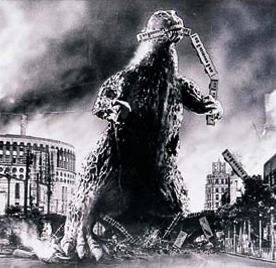
Litzilla vs The World

Litzillaby Darren Lee

For some time now I have been incubating a monster in a quiet corner of my house.

It started off as an innocent enterprise, the result of over-eagerness during free time spent nonchalantly wandering around bookshops; I caved in at the distraction of the many colourful spines compressed on the shelves, the tables of promotions and carefully curated selections from the bibliophile bucket list. I bought the books and took them home intending to wallow in the wisdom of their pages, but instead there were other things to which I diverted my attention. And so, these stories that I had hoped to enjoy sat ignored in the corner, patiently waiting for the day in which they would feel my fingers tickling their pages and see my eyes dart back and forth across their text.

This was never intended to be a permanent arrangement, but over the years this nameless corner grew until it became time for it to be christened as “the To Read pile”. But that name seems no longer appropriate; something has began too fester in the pile, a dark malevolence spreading its tendrils throughout the room. The pile has propagated and mushroomed into a pulsating monster, a beast born from my addiction to books, a foaming monster I have ignored to far too long. The To Read Pile is dead, long live LITZILLA!

Litzilla is a creature made of many parts: Its legs are sturdy, and made of the thickest tomes from the Three-For-The-Price-Of-Two era. It clomps around supported by these pages, novels that were intended to be read, but have been mostly ignored since they were the unloved stepchildren of the originally purchased trio.

Litzilla’s girthy waistline is comprised of charity shop finds; as if the frivolous purchase of a book was justified by its philanthropic intent. This part of Litzilla is mostly made up of seventies Penguins, and their distinctive spines make it look like the abominable creature is sporting a distinctive orange jockstrap.

Litzilla’s torso is made up of those important books that I’ve genuinely always meant to read, but have found physically inaccessible; removing one from the pile will cause the entire structure to teeter over, burying me under a Jenga tower of unread text.

Litzilla’s head is a bulky, Easter Island type-affair made from hardbacks grabbed in the January sales. At first I was eager to leaf through these, but now they’re bulky and cumbersome in comparison to their paperback compatriots.

The crowing of the beast is a single cyclopic eye made from Richard Flanagan’s Booker winner, purchased automatically following the award. It is the capstone holding Litzilla together, staring at me with its beady gaze. Even though it’s only been there for a few weeks, it stares at me, hurt with neglect and demanding to be read next..

Efforts to constrain Litzilla have met with failure; I’ve tried pruning its limbs by slowly reading those books that I have so cruelly ignored. Litzilla has also been cropped, cuttings have been made and sent to the second-hand shop, where they will no doubt take root in someone else’s library. In one drastic move to arrest the growth of this bibliogical behemoth I banned myself from adding to it’s weight for several months, thereafter the siren call of literary shopping lured me back in. I have tried to cage Litzilla on a sturdy shelf, but now its bars are buckling and the monster is breaking free to leave its deposits around the house; all of them guilty piles admonishing my shortcomings as a reader.

The monster has become sentient. I fear its retribution. One day it will swallow me whole and trudge slowly from my house, looking for similar To Read Piles with which to merge. This giant book monster will run rampant, devouring streets, neighbourhoods and cities. No one will be safe! Run for your lives Litzilla has been awakened!

And yet still, I realise that I’ve not bought the new Ian McEwan yet, and well, it is on special offer at the moment. I would be foolish not to…

You can read, The Assembled Self, by Darren Lee in the upcoming publication from Transportation Press, Islands and Cities, for updates on the release subscribe to our newsletter.

The Hateful Sea

The Hateful seaby Tadhg Muller

LEAVING MY HOTEL room I tread into early morning, out onto a street of shadows and darkness. It is hell to distinguish one thing from another, there are tangible objects like dull weights that lend the earth some concrete meaning: bricks, walls, streetlights, gutters, bins overflowing with shit, and waste, and refuse. But something else captures my dull morning consciousness, the sponge like sensation of cardboard moving beneath my feet, moving like tectonic plates, moving on the stone shifting the reality I am in, and leaving in its wake minor eruptions and minor marks of ruin. There are countless boxes broken and laid out under arches, inside doorways, beneath the rotting awnings of this tired Mediterranean dump. Grim shelters that call to mind a thousand lamentations: failed pasts, lost dreams, broken promises, and mostly misery, mostly the misery and inequality of this age we are in. Mega wealth, competition and success; poverty, defeat and failure.I’m on route to a funeral – on an island that I must take a ferry too. I hate the sea. I hate the sea twice over. I’ll walk the 10 kilometres down to the port, the prospect of old companions and water lend themselves to a long fruitless walk, and the constant reminder of my hate for the sea. There are only two ferries this week (even though it is high season), and on this route I anticipate a ferry packed full of old acquaintances. The face of my past, faces that once belonged to friends. I’ll know once and for all how much I hated them, each and every last one, and I’ll see my own hate reflected back at me. And we will reflect on how we have grown old, and fat, and bald, and ugly… mostly ugly and mean with age.

I begin my walk amongst long forgotten and decrepit buildings, on a side street that will metamorphose into an urban highway, a highway that runs to the port and along which I will chart my journey. A tired road, cracked and damaged like a skeleton, its walls stencilled with empty slogans. There is a madness to this world.

The footpath becomes narrower its surface broken. There are groups of scroungers by the side of the road. I’ll make my way down an adjoining street: find some peace and quiet and compose myself. I turn on my I-Phone and go to Google Map. I have been walking for some time and the water I have is empty. There is a hint of salt on the breeze. I turn a corner and discover I am back on that main road. Aren’t we always pressured and pulled towards the centre. Isn’t that life all over. One moment we make the call and we head out in our own direction only to be pulled back, driven towards the centre. It is hard to pull away, it is hard to chart your own course.Now I am descending further and further into the freeway apocalypse, the pit and the concrete labyrinth that surrounds the modern city. Its poison, and gas, and rage, and fury – somewhere beyond this is the water. Rising on elevated concrete pillars the road narrows like a funnel, higher, faster, madder, more unforgiving. Along the edge, the footpath is vanishing into overgrown vine: I have entered the hinterland. All the while the traffic becomes madder and madder. Cars hurtle closer and closer. Drivers thump horns and gesture frantically towards me as if I have intruded on a very intimate moment – finally the footpath is gone altogether. And the cars come closer, and the drivers’ faces feel as if they are pressed against my own. Mostly they look dead, angry, sad and desperate. It is hard to understand what this is all for. I turn back and very carefully follow the map on my I-Phone, and I go a long way down until I can exit back onto the main road… this time intent on taking the right turn… No! I realise I have made the same mistake, and the whole world is hurtling towards me once more, and I am hot and tired and there is no respite.

I start to visualise the players and pieces that filled my past down at the port in a long sensible line. My brothers and sisters, a school teacher, a friend now a lawyer, a doctor, a member of parliament, a teacher, a kid from down the rd, a girl I convinced myself I loved, an old man from the bottom of my street. I have taken the wrong path once more, made the same mistake again and again, looked back and retraced the footsteps of this life and lost my way having always angled away from the centre. I turn back carefully and retrace my footsteps, mindful not to look at my reflection, mindful not to tread upon my shadow.

And I find it, I find the way.

And I am standing at the port with one thousand ferries, the crowds, the ticket officers, the docks, the point of arrival and departure, revellers… And the journey has taken half the day.

The faces that strike me, they belong to strangers. All those people were never too bad (that inhabited the past). Fool that I was to consider that their journeys were any straighter than my own, any more orderly, any more predictable. I’ll mark the death of this friend on his island alone. I make my way to the waters edge, the water is still and calm, the hateful sea it is empty.

You can read, The Reprieve, by Tadhg Muller in the upcoming publication from Transportation Press, Islands and Cities, for updates on the release subscribe to our newsletter.
Not Writing a Novel

Photograph: Oliver Mestitz

by Oliver Mestitz

A couple of years ago I told everyone I was writing a novel. I’d finished a Bachelor of Arts, majoring in Creative Writing, which included a class called Novels. I’d written a first and last chapter and planned what would happen in between. I was unemployed and playing in a band and had a job lined up overseas that I had to wait a couple of months for. I spent most of the time browsing the University careers website, looking for participant surveys and PhD experiments that paid ten dollars for an hour’s work. I’d even thought of a title. My novel was called Whalefish.

The only person who knew I was lying was a girl I had a crush on, which in my mind made it seem like an illicit, personal truth that would inevitably bring us together (it didn’t). I met her parents – genuine, non-judgemental people – and when they asked me what I did I told them I was writing a novel. I looked at her after I said it, all knees under the table, as if to say: See?

Most people left me alone. Few seemed to care. Not one person I told about my novel got as far as asking me what the title was or what it was about, let alone how far through I was or if they could maybe read some of it. The exception was my grandfather, famous among his family and friends for his love of literature. He told me once that so many people recommend books for him to read that he’s had to develop the 50 page test – after that it’s pass or fail. Like Joaquin Phoenix in Gladiator, his thumb wavering. He has his own library, which has a ladder in it.

Every now and then my grandfather would send me letters on a slip of letter-writing pad: How’s the novel? Each letter was headed with a sticky label with his name and return address printed in a small but legible font. I would send him long, indefinite answers or else recommend more books for him to read as a distraction. Once I tried to change tack, to lower his expectations: It’s actually more of a short story cycle than a novel. But he didn’t take the hint or else chose to ignore it, asking after the novel whenever he saw me with a persistence that was tragic and flattering.

Eventually I went overseas and came back fourteen months later armed with a new, if temporary, answer to the inevitable question: So What Do You Do? The next time I saw my grandfather I promised to send him a copy of my first EP, which I’d recorded in my bedroom using someone else’s microphone and an 8-track cassette machine. I wrapped a CD in tissue paper and put it in the mail. My grandfather wrote back saying that he could get to like it if only he could hear the words.

You can read, How to Pick Up an Echidna, by Oliver Mestitz in the upcoming publication from Transportation Press, Islands and Cities, for updates on the release subscribe to our newsletter.
Richard Flanagan and the Global Literary Map

flanagan world map

Ben Walter reflects on Richard Flanagan’s Man Booker prize win and whether this accolade will have a ripple affect on Tasmanian literary shores.

Here is what I knew about Tasmanian literature in the mid-90s. I knew that there was a literary magazine, Island, which my mother and step-father occasionally bought; these sat around the shelves – old, large-format Cassandra Pybus issues with writers’ faces and their leather jackets posing from the covers.

I remember reading what remains my favourite Tasmanian short story, The Sarsparilla Heights Writers’ Group Biennial Short Story Competition: Reading the Honourable Mention, by Pete Hay, and also a poem by Tara Kurrajong, who I later met very briefly through outdoor education circles at Rosny College. While walking up the side of Lake St. Clair, I remember her being surprised when I mentioned that I’d liked her piece. On the Austlit database, I notice that both these works were in the same issue, number 70, published in Autumn 1997. For me, this must have been a tipping point of sorts.

I remember that in the previous year, or perhaps the one before it, I’d chosen to do a study on Richard Flanagan for a high school English class. There wasn’t a lot to study at that time. Death of a River Guide had been published, and Richard was kind enough to do a short phone interview where I offered unwieldy questions and hopelessly tried to record his responses with a rubbish tape recorder placed against the old-fashioned dial-up phone downstairs.

I remember the invitation to the launch of Death of a River Guide sitting on my mother’s fridge in 1994.

There has been a lot of talk about how Richard Flanagan’s Man Booker prize win will raise the profile of Tasmanian writing internationally. Senator Christine Milne, quoted in The Sydney Morning Herald, stated that “Richard…has now put us firmly on the global literary map.[1]

It’s been an oft-repeated sentiment, as though there actually was a global literary map.

And it might be a little bit true. But I believe it is looking at the matter in a wrong-headed, brand-centric way. Certainly, the win puts Flanagan’s writing on the world stage – deservedly – but most readers are content with a representative exotic from any particular region. They follow writers, not regions. Perhaps you’ve read and loved Gabriel Garcia Marquez. Are there other Columbian novelists you’ve hunted down as a consequence of reading him?

As Tasmanians, we can be so obsessed with how others see us that we don’t take the time to reflect on how something like this might influence the way we see ourselves – one of the many reasons we might require a greater appreciation of our writers.

Perhaps the true significance of Flanagan’s win is how it can continue to make literature a reality, a live issue and a real option for young Tasmanian writers – just as it did for me twenty years ago – as well as the spectrum of Tasmanian readers. It puts literature on the front page.

Responding to 936 ABC Hobart’s question on Facebook in the wake of the win, “Who is your favourite Tasmanian author?”, one poster responded “I didnt realise we had more than one author” [sic]. Not everyone has issues of Island Magazine sitting around the house – almost nobody does. The Tasmanian literary community is fragmented and barely functional, connecting with a tiny fraction of the population.

But there will be a lot of copies of The Narrow Road to the Deep North resting on proud shelves. And it is much more important to celebrate what these novels will do for the ideas and aspirations of our developing writers, our thinkers, our historians and journalists and our scientists, than what a champagne flute on the other side of the world thinks of our distant and remote island.

[1] http://www.smh.com.au/entertainment/books/booker-winner-richard-flanagan-flogs-opinions-as-well-as-books-20141016-117awb.html

You can read, Fall on Us, by Ben Walter in the upcoming publication from Transportation Press, Islands and Cities. For updates on the release subscribe to our newsletter.
Shelter

Susie greenhill october 2014

by Susie Greenhill

They found places to keep things, islands, that’s how it started. Atolls for cartons of egg-shells, for foreign postcards stacked in boxes. Archipelagos cluttered with shipping-crates of photographs, moss-terrariums, insects adrift in methyl-alcohol, vials of nectar, jars of ochre-coloured soil. Islets devoted to feathers, to gem-stones they’d found while still clinging to the mainland coast, still sifting through the deserts. Uncut sapphires glinting in torch light, kicked over on the goldfields – carried now in buckets with amber, quartz, granite flecked with mica – coated with dust from dilapidated shacks, busted cities, from the gully where their tumbling down home had once stood, leaning into the westerlies, into winds that brought ice then razed forests, bared the green of the plain.

They had an atoll for seeds, un-germinated seeds which they’d stored for posterity, a vestige of hope. They ferried them to that island in flotillas of walnut shell boats, while the ocean was still as a stone. She remembers that day as the last when they knew they could still return to their home.

They built shelters: a tower of spiralling shell, bunkers lined with coral, they slept on pandanus. When night fell they paced out the shores of their islands, the silt coves, they followed the rhythms, the turnings of the phosphorescent tide, they spoke about the sky, about the lights they saw sometimes in the distance, the fishing hulks, the ferries carrying children, rising, falling on the horizon to the north.

‘What will we do if they come here?’

‘Why would anyone come?’

‘If they’re lost?’

‘These islands are too small, they’re too low. They will see that.’

‘But those boats, they’re not safe.’

‘If they come here we will go.’

And things did come: discarded things, a child in a basket of reeds, up-turned rafts, leather boots, things that sting. They fended them off, they waded into the shallows and veered them off-shore with poles whittled from palms, with nets woven of shoe-laces, frayed ends of string. They were grateful for the fins, for the singing.

The winds came. They swept over the islands like a flood. Pieces of damp paper, torn letters shivering in leaves, in the branches, filled the air above their islands like locusts, cicadas falling from the spinning of the sky – catching in her hair, covering the floor of his boat. In the tower she pieced them together, words about love, about things they had lost.

‘Will nothing grow now?’

‘I don’t know. Some things will.’

She placed her hand on the warmth of her belly, she remembered the swelling, the kicking of feet, tiny elbows sculpting tents out of skin. She thought of the child in the basket.

‘He could have stayed. There is room.’

‘It’s too late.’

You can read Unravelling, by Susie Greenhill, in the upcoming publication through Transportation Press, Islands and Cities. To stay updated on release date, subscribe to our newsletter. 
The City Once An Island That Went To The Dogs – Part II


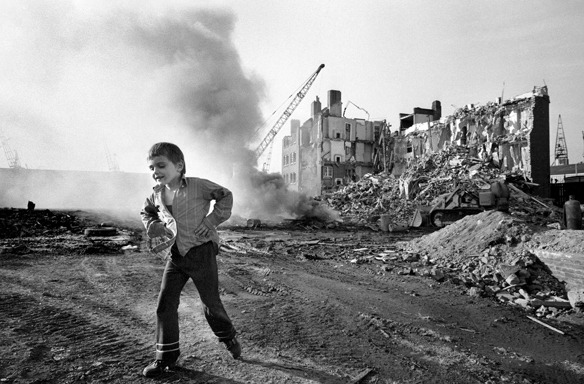
Part II_isle of dogs_Sean Preston Open Pen TransportationLondon editor, Sean Preston looks at the island that isn’t an island, at odds with itself and the relentless change of the city it sits within.

You can go to The Isle of Dogs now, and you’ll still find ‘indigenous’ Islanders there. They’re fewer and farther between, but they’re there. But it doesn’t overturn the change of pace and face to the Island. House prices are of course indicative of its popularity. I see the same in Limehouse. The Occupyists and ‘Shire artistes squat in derelict shops and the onset is forged: The rivers will run red with their watercolours. In time, my road will fall much in the way of the rest of East London. Those that have moved here, often seeking to oppose the banking establishment, are those that trendify an area. And they have a right to, I believe. There’s no point in begrudging London’s nature, for London has always been tidal. Is this tide synthetic? Probably. I’ll not be quashed by many for suggesting that, generally, in this city, like all others, wealth will have its way.

President Ted Johns of the Republic of the Isle of Dogs didn’t stand for it for long and I believe his method of ridicule and farce as a political tool made much sense. I have argued, perhaps to my detriment in some corners, that trolling is the great art of our time. I really do believe that to be the case (and look at it this way, if it proves not to be, I can always pretend I was just trolling). From his presidential home, which was in fact a small council flat on the Island, Johns and family presided over the new republic and, significantly, invited the world’s media into their home, their lives, their nation. The passports, barricades, immigration documentation, to me, are important artifacts of post-war London. And the newspaper cuttings even more so. It is known to us by now that to live by the media is to die by the media, and so it was with the independent state. The fortnight of coverage brought with it exposure of the squalor that even The Times called “Victorian”, but caused enough of a stir upstairs that the full tabloided onslaught was visited upon it.

Humour, bizarrely, has to be at the centre of our endeavours against those that seek to garrote social equality. Irony as a defense mechanism is nothing new; it’s unreservedly London, English. Literature has a part to play in this, and has been the primary canvas of insurrection and mockery for as long as we’ve scribbled. It’s hard to know how relevant, or how conspicuous this form of literary fiction can be in the century already well underway. I suppose the one thing about the oppression of opinion labelled extreme by those that gain from doing so, is that it requires the artist – the writer – to augment their creativity, just as Ted Johns did, abruptly, sensationally, for a fortnight in 1970.

The City Once An Island That Went To The Dogs – Part I

Part I_Isle of dogs-iod

London editor, Sean Preston looks at the island that isn’t an island, at odds with itself and the relentless change of the city it sits within.

Londoners will know to which area the riddled title of this piece refers, the rest of the world, perhaps not. The Isle of Dogs isn’t an island, not really. It’s a peninsula in London and an area unlike no other, enriched with the fog of a confused identity. Once the home of mass and abject poverty, often degradation, community, Dockers, now the home of mild gentrification, marginalized poverty, and of course, what we call “The City” which is in fact London’s vainglorious project of the last part of the 20th Century in the form of skyscrapers that line the north of the Island, blocking out the sun. It’s East London, but sort of sits in the South and feels like it too, drooping, weighing down our Thames and bending it all out of shape. The Isle of Dogs has been threatening to burst for centuries. I wonder if all of London would seep down through it, down the plug, into the Garden of England via Bromley.

Abruptly, sensationally, for a fortnight in 1970, it became an independent state. In a move unavoidably likened to the Ealing comedy Passport To Pimlico, Labour’s Ted Johns, originally from Limehouse where I live, and a man of some lineage (his forebearers were involved in the Dockers’ Strike of 1889 and fought against Franco’s brand of Fascism in the Spanish Civil War), issued a Unilateral Declaration of Independence as a reaction to, primarily, poor facilities for its some 10,000 residents of the topographic wonderland. The Island had been pushed as far as it could withstand. Paucity was a way of life, and with it anger. Routinely, the Islanders were overlooked, ignored, condescended. Inhabitants were treated obnoxiously by the Port authority, and Poplar’s Labour, a political party they backed unreservedly, seemingly ignored them. So too did Tower Hamlets which later encompassed the Island. It was time for regime change. It was time for President Johns. Of course, the move was always going to be more a statement (a crucially well-covered light trolling of the authorities) than it was a military coup with geographical longevity.

Within this anomaly in time, we see a microcosm of what was to come in East London. Gentrification, state-led or otherwise, is paramount for all of us to see. It’s the theme storified in pubs over pints. A friend of mine, rather crudely, told a two-part tale: In 2001 he was offered full board by a lady of Dalston’s night for a nominal figure. Just ten years later, he couldn’t get a pint for the same price in the same area. I laughed recently when another friend told me that the name Poppy, a name presumably favoured for baby daughters by the money-classed new parents of the eighties, was short for Pop-Up Shop. We joke, but Working Class Inner London is on its way out. Perhaps it’s this nagging truth that draws me to East London’s local history. There’s something rather horrendous to watch, most would agree, in the act of uprooting a tree. It seems cruel and tasteless, and I say that as someone not known for his environmentalist sympathies. The Islanders knew that troubles lay ahead in this respect. Microlocalism is important to those with little else. They were going to be dug up and chucked out. Not immediately, not barbarically, and not unlike the undesirables of London are being tossed asunder now. Quietly, permanently, eradicated.

Read more on the Isle of Dogs next week.

Tasmania, a Lovesong: Part IV

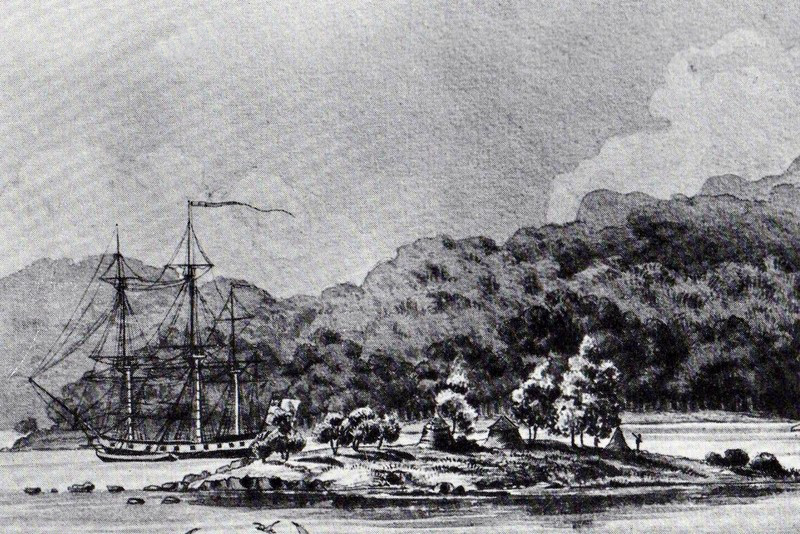
Week 4 – 24 sep – last instalment of john Bryson The ship Ocean, off Hunter Island c. 1804
The ship Ocean, off Hunter Island c. 1804

In September, we share four installments of the short story Tasmania, a Lovesong, by Australian author John Bryson, which journeys us along the eastern waters of Tasmania. Here is the final part.

SUCH IS THE TIMING of these passages that I’ve never seen this part of the coast other than etched on the radar screen, at night. Bisheno town makes a bright circle, and you’d think so snug a harbour safe in any weather, but a bar-room wall somewhere in every fishing village carries a framed photograph of the tempest of the 1960s, this causeway astream with foam, trawlers at terrified mid-leap, overwrought anchor cables whining and defeated, hulls on the Esplanade already stripped to the ribs, where huddle the watchful townsfolk, awed, ruined.

A southbound freighter, chatty, nearly home, found the right frequency to tell us we would have a tough night once we made it around the corner. He meant Cape Naturaliste, and we knew already. The sea was still slick, but the deck was atilt from other pressures high in the rigging. Mathers, who delights in the advent of small miracles, found he could read a magazine at the stern rail, so bright was the luminous wake. This was partly the gift of the vanishing moon, now heading to the clouds.

The Eddystone Beacon, blinding as it caught the deck, swept then the path maybe a mile ahead, rain squalls and scuttling cloud at whitecap height. By Mussel Roe Bay, at the northern tip, we were into the gale. The tide was headstrong, so we stood toward Clarke Island, to quarter the seas, but maybe also because of the association with good fortune, for when the Sydney Cove went down around here in 1797 the nine survivors were taken by Captain Flinders only as far as the mainland edge, told to walk to Botany Bay, and Clarke, with one other, made it.

Mathers was showing considerable grit himself, and I revere the picture of him still. This was his first passage and he might have hoped for better. Making soup, he jammed himself by the stove to hold the kettle over the flame. He judged the troughs, rather than the crests, would give him the correct momentum to run a steaming mug up the stairway, from the galley through to wheelhouse. It was Mather’s idea to extinguish all deck lights, since what they lit best were the frightening seas, and no freighter could see us anyway. Meantimes, he lay on the saloon floor, not to be thrown again from the bunks, and it was his questing fingers which found water there, so we had damage the pumps were not holding.

At sour first light we swung for Franklin Sound, between Flinders Island and Cape Barren. The approach is long and lumpy in these conditions, but around midmorning we had company, a fishing boat waiting in the channel to stand alongside us the rest of the way in. I knew her well, had fished on her two years or more, and might have expected nothing less than her appearance here, at this moment, should have expected her clowning skipper to toss a can of beer off board so we could toast landfall in tandem, should have expected his waving wife, who is also the Harbour Master here, to shout of a readied birth at the wharf.

Astounding it was how these folk warmed the morning. Is this all it takes, these acts of kindness, to sweeten the world? To remember that these are seas of beauty and abundance, where you may happen on one hundred and fifty acres of resting shearwaters, watch ridiculous dolphin roll and dandy for hours under the bow, sometime follow wave upon wave of glittery tuna surfing the shoals?

To still the wind, to blue the deep, to summer the firmaments? Is this all it takes?

About the Author:

In 1985, the book Evil Angels by Australian author John Bryson was released. Its revelatory investigation into the disappearance of Azaria Chamberlain shed new light on the controversial case and quickly became a career defining piece of work for Bryson. Other publications include the novel, To the Death, Amic (Viking/Penguin 1994) a collection of short fiction, Whoring Around (Penguin 1981) and a collection of reportage, Backstage at the Revolution. Bryson lectures in law, literary journalism, and fiction, acts on advisory panels to government, NGOs, and universities, and on literary judging panels. At the end of the millennium, a Schools of Journalism panel included him in ‘The 100 Australian Journalists of the Century’. In 2014, he was awarded membership of the Order of Australia.

Tasmania, a Lovesong: Part III

The Lady Nelson in the Thames, whose explorations included the Bass Strait c. 1802

In September, we share four installments of this short story Tasmania, a Lovesong, by Australian author John Bryson, which journeys us along the eastern waters of Tasmania.

THE SEA PASSAGE I’m speaking of now also carried Peter Mathers who was, around that time, moving from the writing of novels to the writing of plays, despite his brace of Miles Franklin awards, or maybe because of them. From the Dunnally channel we set North, to take the landward side of Maria, the mountain Island named for the wife Van Diemen, and the convict settlement until Port Arthur was thought of. Mathers likes stories to do with delusional grandure, and he had a fine time with this place. Maria, in the late 1800s, was leased for its limestone, kilns built, a hostelry sprang to its feet at North Point, the township fattened, and the company’s paper given a flutter on the London stock exchange. All this enterprise was the vision of Diego Bernacci who then renamed the town San Diego. The timing was just right, as events turned out, for the crash of the 1890s, but thirty years later Bernacci did it again, this time for the crash of 1929. Tasmanians have changed the name of the town back to Darlington.

Not far off course, and worth every mile, is Isle des Phoques. Left over from some previous arrangement of nature, these grand pillars have no inland to support any more. The pose is of enough scale, and of might, to stand as a nostalgia for the size of the world once was: here is Atlas relieved of duty. The trick now is to glide as closely as nerve allows. These heavy portals have been teetering here a long time so far anyway, and watch the birds nesting the ledges. The instant they scream: the terns, gulls, cormorants, all into the heart-beating whirling air, so will it seem that you have chosen the exact moment for the collapse of the counterpoise, of the entire crumbling vault, pealing from higher than the masthead, a landslide exploding into the waters all around, and I’ve watched seafarers go ashen right then, until the eyes catch up with the action enough to see that these are seals, hundreds maybe, the bulls and the cows roaring their dainty calves to the long plunge, to surface again in the tumultuous water, whiskery and inquisitive.

Dusk is not long away, but before it’s too dark I want to get us through the Schouten Passage, sea side of the Great Oyster Bay, and near enough to halfway now to Bass Strait. We could go around, and out into the Tasman, but the charm of the inshore route is the scenery, and the navigator’s excuse that, in here, we dodge the south set of the outer current. The island and the peninsular almost meet, and it’s difficult to see the convenient gap. But the run, when you find it, is very deep indeed, and so a favourite of locals. I know a Hobart seaman with a Masters ticket whose job is to pilot rusty ships from the far Orient to his home port for refit, and who, one summer evening, turned the 25,000 tonnes of Japanese freighter under his command through the skimpy passage here, grinding neither side on the rocks, to the tooting delight of the nearby lobster fleet, which understood just who must be up on the Bridge there, whose hand to the wheel.

About the Author:

In 1985, the book Evil Angels by Australian author John Bryson was released. Its revelatory investigation into the disappearance of Azaria Chamberlain shed new light on the controversial case and quickly became a career defining piece of work for Bryson. Other publications include the novel, To the Death, Amic (Viking/Penguin 1994) a collection of short fiction, Whoring Around (Penguin 1981) and a collection of reportage, Backstage at the Revolution. Bryson lectures in law, literary journalism, and fiction, acts on advisory panels to government, NGOs, and universities, and on literary judging panels. At the end of the millennium, a Schools of Journalism panel included him in ‘The 100 Australian Journalists of the Century’. In 2014, he was awarded membership of the Order of Australia.